Thunder is one of the three big skateboard truck brands, alongside Independent and Venture, and a favorite of a lot of technical street skaters. It’s lower, lighter and turns faster than most, and its team has included Jamie Thomas, Ishod Wair, Mark Suciu, Jamie Foy and Guy Mariano. It’s also the oldest brand at Deluxe, the home of Real, Antihero and Spitfire.
Here you’ll find Thunder’s history, all its lines, sizes and weights, which size you need and how it compares to Independent and Venture.
How Thunder started
To understand Thunder you have to start with Fausto Vitello and Eric Swenson. They were Harley-Davidson race mechanics who set up Ermico, a small foundry, in San Francisco in the 70s. Their first truck was the Stroker, with independent suspension and lots of springs, and in 1978 they created Independent. In 1981 they also founded Thrasher magazine.
One of their first skaters was Terry Nails, a musician and skater from Los Angeles who for a long time was the only rider on their first brand. Nails has said that he, Vitello and Swenson created Thunder, and that by around 1984 it was already selling with its own team, mostly Santa Monica Airlines skaters: Nails shared a house in Topanga Canyon with Skip Engblom, the owner of that brand.
The first Thunder baseplates carried different emblems: a lizard, a dagger, an axe, a saber or a skull and crossbones. The rarest one, and Nails’s favorite, was a skull in a top hat.
Nails left in 1986 to focus on music. That same year Vitello and Brian Ware founded Deluxe Distribution in San Francisco, to distribute a punk record label, Beware Records, Supercush bushings and Thunder trucks. So Thunder is the oldest brand at Deluxe, the house that later created Spitfire (1987), Real (1991), Antihero (1995) and Krooked (2002).
Who owns Thunder?
Thunder belongs to Deluxe Distribution, which in turn belongs to Ermico Enterprises, the Vitello family company. Fausto Vitello died in 2006, and his family stayed at the helm: his son Tony runs Thrasher. Thunder has never been sold to an outside group. Since 2011 Deluxe also distributes Venture trucks.
Thunder’s lines
| Line | Sizes | Height | What it has |
|---|---|---|---|
| Team Edition | 143 to 181 | About 50 mm | The classic truck, quality kingpin. The heaviest |
| Lights | 145 to 151 | About 49-52 mm | Hollow kingpin and forged baseplate |
| Team Hollows | 145 to 149 | About 50 mm | Hollow axles and kingpin |
| Hollow Lights | 145 to 161 | About 49-52 mm | Hollow axles and kingpin, forged baseplate |
| Titanium Lights | 145 to 149 | About 49-51 mm | Titanium axles, hollow kingpin, forged baseplate. The lightest |
| Lo 145 II | 145 | Lower | For small decks and 50-51 mm wheels |
| T-II | 161 and 181 | The Team redesigned for wide decks, from 2025 |
Thunder also sells its trucks in Hi (taller) and Lo (lower) versions. The Lo trucks, like the Lo 145 II, are meant for small wheels: if you put big wheels on a low truck, they can bite into the deck when you turn.
Weights
Per truck, roughly:
| Model | 147 | 148 | 149 |
|---|---|---|---|
| Lights | 317 g | 343 g | 349 g |
| Titanium Lights | 312 g | 313 g | 315 g |
A Hollow Lights 149 weighs around 330 grams, and a pair weighs about 128 grams less than a pair of standard Independent Stage 11s.
Thunder truck sizes
The number on each Thunder is a code, not the exact width in millimeters: a 148 isn’t 148 mm wide. What matters is the total axle width, which should be close to your deck width:
| Thunder truck | Axle width | Deck |
|---|---|---|
| 145 | About 7.75” | 7.5” to 7.75” |
| 147 | About 8” | 7.75” to 8.25” |
| 148 | About 8.25” | 8” to 8.5” |
| 149 | About 8.4” to 8.5” | 8.25” to 8.6” |
| 151, 161, 181 | Wider | Wide decks, bowl and cruiser |
Heads up: an Independent 149 isn’t the same as a Thunder 149. In width, it’s closer to a Thunder 148. If you want to work out your exact size, check our guide to choosing skateboard trucks.
Thunder vs Independent and Venture
| Thunder | Independent | Venture | |
|---|---|---|---|
| Height (in the highs) | The lowest, about 50-52 mm | 55 mm (Stage 11) | About 53.5 mm |
| Weight | Light | The heaviest | Mid-range |
| Stock bushings | The softest (90A) | Medium | The hardest |
| Turning | Quick | Progressive and stable | Stable |
| Typical terrain | Technical street | Bowl, ramp, everything | Stability, mini ramp |
In practice:
- Thunder turns quickly and weighs little. It suits anyone who skates a lot of technical street, flips and curb tricks.
- Independent is taller, heavier and more stable. It’s the favorite for bowls and transition. You can read about it in Independent.
- Venture sits in the middle, with harder stock bushings. You can read about it in Venture.
Thunders have a flat-head kingpin, and their baseplates don’t fit with some risers from other brands, so it’s worth checking before you buy. If you want to see them all side by side, check our comparison of the best skateboard trucks.
The Thunder team
Plenty of the best street skaters have ridden for Thunder. Jamie Thomas is one of its legends. The 2012 catalog featured Ed Templeton, Chima Ferguson, Mikey Taylor, Chris Miller, Collin Provost, Chris Cole, Justin Brock, Mark Appleyard and Neen Williams.
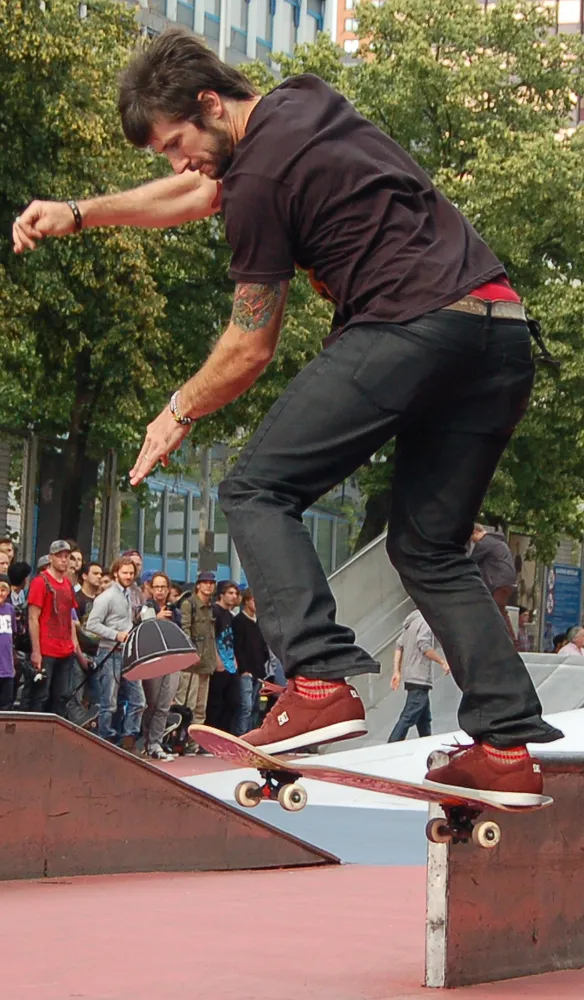
Today Ishod Wair, Mark Suciu, Jamie Foy, Tyshawn Jones, Silas Baxter-Neal, Franky Villani and Moose have pro trucks, and Guy Mariano joined in 2019. Nora Vasconcellos, Joe Campos, Ronnie Kessner, Nick Michel and Chris Athans are on the team too. Among the Europeans are Belgium’s Axel Cruysberghs, Norway’s Hermann Stene, Finland’s Eetu Toropainen and France’s Hugo Corbin.
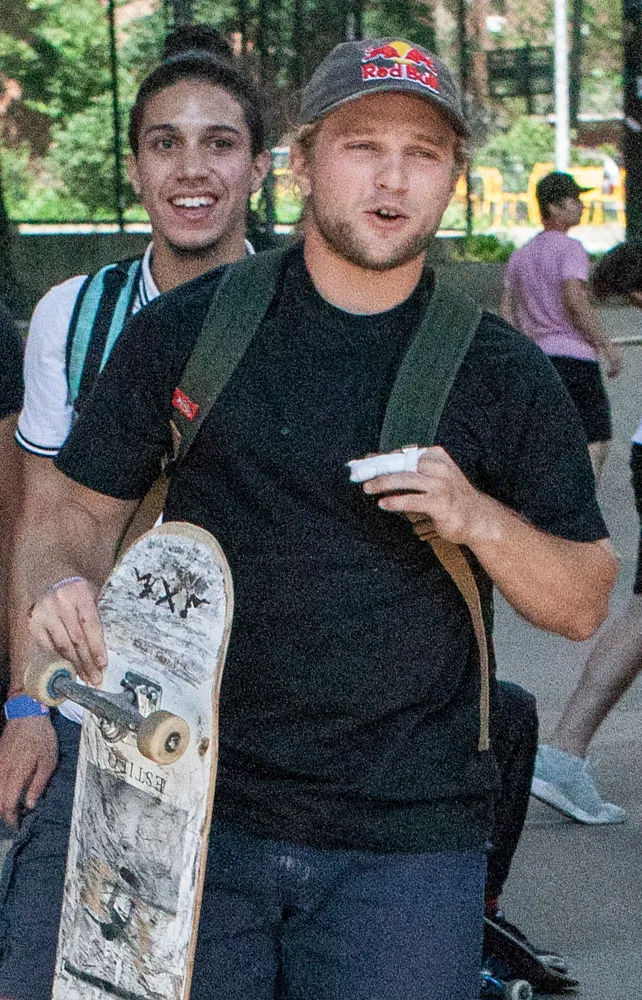
The brand has a video series, Knows, where each skater shows off their setup. This is Ishod Wair’s:
And these are the new T-II, in 161 and 181, introduced in 2025:
Who are Thunder trucks for?
- If you skate technical street: they’re among the most used trucks, thanks to their quick turning and light weight.
- If you’re just starting: they turn easily and the soft bushings don’t need breaking in. A Team or a pair of Lights in your size are perfect.
- If you want the lightest truck: Titanium Lights. If you want something almost as light but cheaper, Hollow Lights.
- If you skate bowls with big wheels: check the height carefully or use risers, or pick a taller truck.
If you don’t know which size or brand to pick, check our guide to choosing skateboard trucks.
Frequently asked questions
Thunder or Independent?
Thunder is lower, lighter and turns faster, and its stock bushings are the softest. Independent is taller, heavier and more stable. Thunder is a favorite for technical street skating, Independent for bowls and transition. Both are great.
What size Thunder trucks do I need?
The 145 works for decks around 7.5 to 7.75 inches, the 147 for 7.75 to 8.25, the 148 for 8 to 8.5 and the 149 for 8.25 to 8.6. For wider decks there are the 151, 161 and 181. The Thunder number is a code, not the exact width in millimeters.
What's the difference between Thunder Team, Lights, Hollow Lights and Titanium Lights?
They go from heaviest to lightest. The Team are the classics and the heaviest. The Lights have a hollow kingpin and a forged baseplate. The Hollow Lights also have hollow axles. The Titanium Lights have titanium axles: they're the lightest, around 312 grams per truck, and the most expensive.
Who owns Thunder?
Deluxe Distribution, the San Francisco company that also owns Real, Antihero, Krooked and Spitfire. Thunder is the oldest brand at Deluxe, and Deluxe belongs to Ermico, the company founded by Fausto Vitello and Eric Swenson, the creators of Independent.
Are Thunder trucks good for beginners?
Yes. They turn easily and the stock 90A bushings are soft and don't need breaking in. If you ride big wheels, watch out with low Thunders, because the wheels can bite into the deck when you turn.
What bushings do Thunder trucks come with?
They come with white 90A bushings, the softest the brand offers. You can swap them for harder ones if you're heavy or like a firmer truck.