
Toy Machine is Ed Templeton’s brand, and almost everything about it comes out of his head: the one-eyed monster, the weird ads, the graphics that mix humor and nastiness, and the way it picks its skaters. It’s also the brand of Welcome to Hell, one of the most influential videos of the 90s, the one from the night Chad Muska lost his spot on the team.
Here you’ll find Toy Machine’s history since 1993, where the name comes from, what the monster is, how Welcome to Hell was made, who has skated for the brand and who Ed Templeton is outside skateboarding.
Ed Templeton before Toy Machine
Ed Templeton was born in 1972 in Garden Grove (California) and started skating in Huntington Beach in the mid-80s, heavily influenced by Mark Gonzales. His first sponsor was Schmitt Stix, which ended up becoming New Deal, and he went pro with New Deal in 1990. That same year he started painting.
In 1992 he left New Deal and started a short-lived brand, TV (Television), with Mike Vallely. Both of them were vegan, and they were drawn to the fact that their distributor ran anti-meat ads. Templeton has told how it ended: Vallely found a turkey in the distributor’s fridge. For a few months Templeton pitched projects to various companies with no luck, until he went back to Brad Dorfman, the owner of Vision, with a brand idea that came with a name and riders. Dorfman said yes.
1993: Toy Machine is born
Templeton started Toy Machine in 1993 because he’d been left without a job and wanted a company he could control. He couldn’t decide between two names, “Toy Skateboards” and “Machine Skateboards”, and a friend, reportedly skater Ethan Fowler, asked him why not use both.
About a year later, Tod Swank offered to run the brand through Tum Yeto, his San Diego distribution company, on a simple handshake deal. Swank let him do his thing: “it’s your company, make it.” Templeton has said that, technically, Dorfman kept the rights to the name, although he never claimed them.
Templeton describes Toy Machine as, deep down, a marketing company, and says he took inspiration from Dischord Records, Ian MacKaye’s label: do things your own way and depend on nobody. At first the idea was “to not give a damn, do something totally different and be funny”. Today he says he thinks up his ads for 15-year-olds, with a wink for the older crowd.
Jamie Thomas and Welcome to Hell
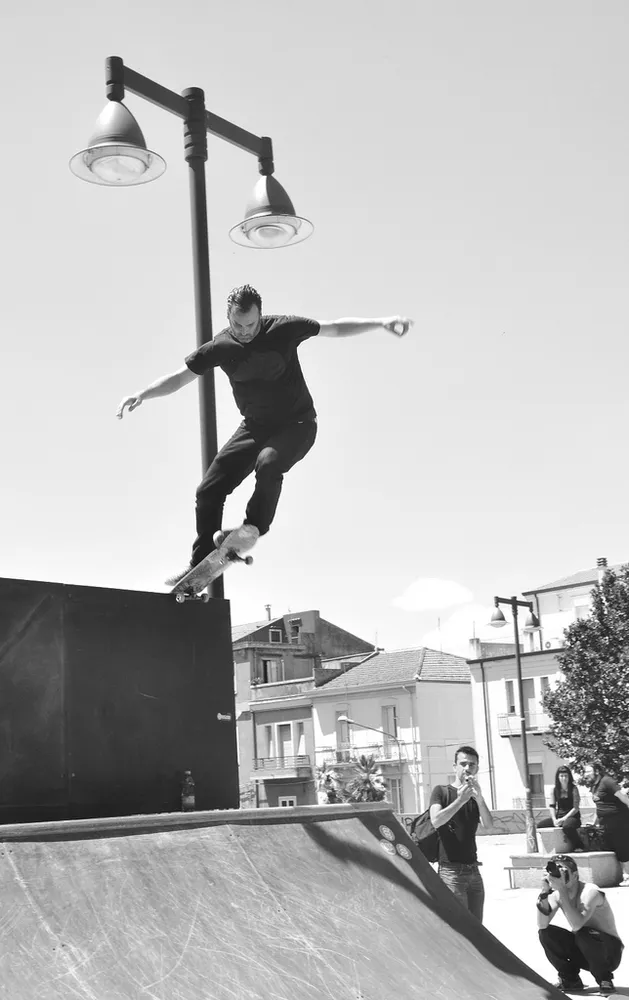
In 1994 almost the whole original team left. Templeton called Jamie Thomas, who had just left Invisible, to rebuild it. They made Heavy Metal (1995) in about six months, editing it tape to tape, and then bought a digital editing setup. Jamie learned to edit on it for the next video: Welcome to Hell (1996).
Welcome to Hell was one of the most influential videos of the 90s, for its pacing and for the way it skated huge rails and stair sets. But what’s remembered most is its premiere, at Jamie’s house in Pacific Beach. The computer crashed and the screening was delayed by two or three hours. Chad Muska, who was injured and only had half a part, wanted to close the video, and the night ended in a heated argument with Templeton. Muska was out of the team. His clips ended up in other videos and the full part came out years later as a DVD extra.
Templeton put his own face on the cover, although Jamie wasn’t sold on it. Jamie Thomas left the brand that same year to start Zero, also with Tum Yeto, and Templeton later drew him as a ghost on a rail, wearing a Toy Machine shirt.
The monster, the eye and the ads
Templeton draws or directs all of the brand’s graphics. The most famous is the horned monster with a single bloodshot eye, from the mid-90s, along with the Sect Eye, the loose eye. Others come from the strangest places: the cat, from an old woodcut in a Metropolitan Museum catalog, photocopied over and over; Andrew Reynolds’s “Turtle Boy”, from a drawing made on a tour with Geoff Rowley in the late 90s.
Each rider can get as hands-on with their graphic as they like. Templeton tells them if he thinks it’s bad, but the skater has the last word. In recent years he has also commissioned series from artist friends.
The ads were as weird as the graphics. One with the text “Anthrax Enclosed” ended with a visit from the FBI, who asked whether he’d made it and reminded him how much a hazmat response costs. No charges followed.
Ed Templeton, artist and photographer
Outside skateboarding, Templeton is a respected artist. His first solo show was in 1994 at the Alleged Gallery in New York, and that same year he started carrying a camera everywhere, after seeing books by Larry Clark and Nan Goldin. In 2000 his series Teenage Smokers won an art prize in Milan worth $50,000. A collector had entered him without telling him, and he found out by phone that he was a finalist. In 2002 he showed at the Palais de Tokyo in Paris and was part of Beautiful Losers, the exhibition and documentary about the artists who came out of skateboarding. His book Wires Crossed collects photos from tours in the 90s and early 2000s.
His wife, Deanna Templeton, is also a photographer. Ed keeps his gallery work separate from the Toy Machine characters. Once, a kid went with his mom to one of his shows in New York expecting to see monsters and found something else, and the mom ended up pretty angry.
In November 2012 Templeton broke a leg at an exhibition and stopped skating regularly. In 2016 he went into the Skateboarding Hall of Fame.
The Toy Machine team
1995-1998: Jamie Thomas, Chad Muska, Elissa Steamer, one of the first women with a pro deck in skateboarding history, Brian Anderson, Brad Staba, Donny Barley and Mike Maldonado.
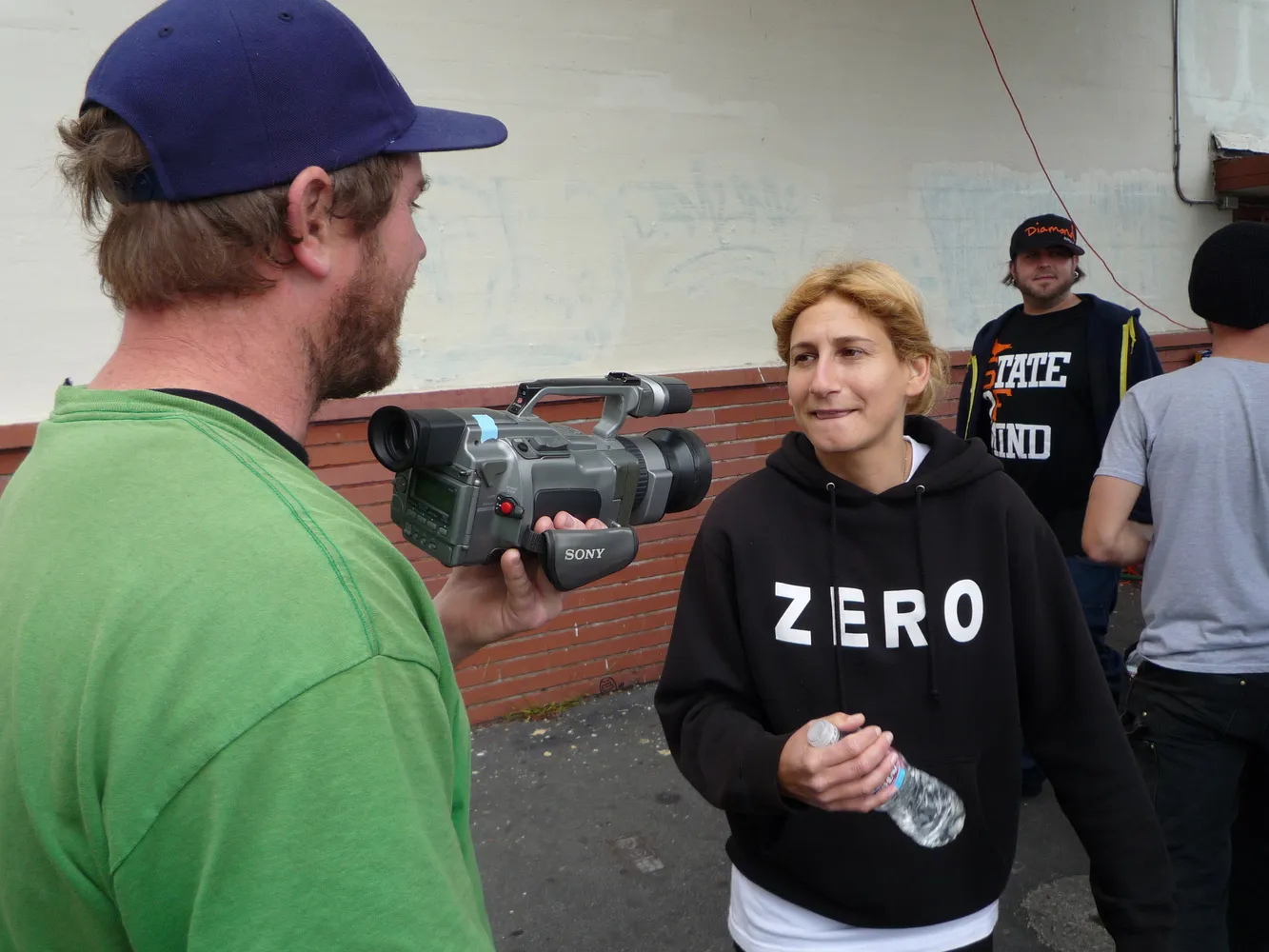
Late 90s: Bam Margera, Chris Senn, Kerry Getz and Mike Frazier. When Tum Yeto asked him to cut a rider, Templeton picked Chris Senn over Kerry Getz, and he has called it his biggest regret.
The 2000s: Austin Stephens, who stayed on the brand longer than anyone except Templeton himself, until his retirement in 2013. Also Diego Bucchieri, Billy Marks, Josh Harmony, Johnny Layton, Matt Bennett and Nick Trapasso.
Since 2009: Leo Romero, who came over from Baker and was named Thrasher Skater of the Year in 2010, Collin Provost, Daniel Lutheran and Jordan Taylor. After them came Belgium’s Axel Cruysberghs, Jeremy Leabres, Myles Willard, CJ Collins, Blake Carpenter and Braden Hoban.
2024: Geoff Rowley, a British street legend. Templeton was his mentor when Rowley moved to Huntington Beach in 1994.
Some very well-known skaters passed through Toy Machine when they were young, before making the jump to bigger brands. Templeton says that, to them, Toy Machine was “too weird”. Brian Anderson came out in 2016, and Templeton has said that while Anderson was on the brand he always respected his decision not to make it public.
Toy Machine’s videos
| Year | Video | What it has |
|---|---|---|
| 1994 | Live! | The first one, which Templeton remembers as “very strange” |
| 1995 | Heavy Metal | Edited tape to tape |
| 1996 | Welcome to Hell | Edited by Jamie Thomas. The classic |
| 1998 | Jump Off a Building | Bam Margera, Elissa Steamer, Chris Senn, Kerry Getz, Brian Anderson |
| 2004 | Good & Evil | With Patti Smith, Dinosaur Jr and Franz Ferdinand on the soundtrack |
| 2006 | Suffer the Joy | Nick Trapasso’s big part |
| 2010 | Brainwash | Debuts of Collin Provost, Daniel Lutheran and Leo Romero |
| 2019 | Programming Injection | Closed by Collin Provost with seven minutes and three songs |
| 2021 | Vaccine | With Dashawn Jordan as a pro |
| 2024 | Real Life Sucks | About 24 minutes, with the arrival of Geoff Rowley |
If you like skate videos, here’s a list of the best skate videos of all time.
Toy Machine decks
Toy Machine sells seven-ply maple decks in sizes from 7.5 to 9 inches. Most of the team skates between 8 and 8.5. It also sells wheels, parts, apparel and complete boards. Its best-known series are the usual ones: the Monster, the Sect Eye and each rider’s pro models. The brand has no special constructions: its personality is in the graphics and the team.
To pick your size, check our guide to choosing a skateboard deck.
Toy Machine vs other brands
- Baker: also a pro-run brand, Andrew Reynolds’s, with a lot of personality. Baker is more “rock” and hard street; Toy Machine is weirder, with a more graphic kind of humor. Check out Baker.
- Element: has more ranges, special constructions and big distribution. Toy Machine is much smaller and more personal. Check out Element.
- Antihero: shares the dark humor, but with a more street, San Francisco look. Check out Antihero.
Who is Toy Machine for?
For anyone who skates street and transition without taking it too seriously, and anyone who likes weird graphics. It’s a seven-ply deck like any good deck, so it’s fine for starting out too: what you’re really choosing with a Toy Machine is the artwork and the story behind it.
Frequently asked questions
Who founded Toy Machine?
Ed Templeton, in 1993, in Huntington Beach (California). Templeton was a New Deal pro and started the brand with financial backing from Brad Dorfman, the owner of Vision. He still owns it and draws or directs all its graphics.
Why is it called Toy Machine?
Templeton couldn't decide between 'Toy Skateboards' and 'Machine Skateboards'. A friend, reportedly Ethan Fowler, asked him why not use both.
What is the Toy Machine monster?
It's the horned, one-eyed, bloodshot character Ed Templeton drew in the mid-90s. Along with the loose eye, the 'Sect Eye', it's the brand's most recognizable graphic.
Why was Chad Muska kicked off Toy Machine?
At the Welcome to Hell premiere, in 1996, Muska had a heated argument with Ed Templeton. He was injured, his part was only half done and he wanted to close the video. Templeton kicked him off, and his clips ended up in other videos; the full part came out years later as a DVD extra.
Who owns Toy Machine?
Ed Templeton. It's distributed by Tum Yeto, Tod Swank's San Diego company, which also carries Foundation, Pig and Dekline.
What videos has Toy Machine made?
Live! (1994), Heavy Metal (1995), Welcome to Hell (1996), Jump Off a Building (1998), Good & Evil (2004), Suffer the Joy (2006), Brainwash (2010), Programming Injection (2019), Vaccine (2021) and Real Life Sucks (2024), plus tour videos.
Is Ed Templeton an artist?
Yes. Besides being a skater, he's a painter and photographer. His book Teenage Smokers won an art prize in Milan in 2000, he has shown at the Palais de Tokyo in Paris and he was part of the Beautiful Losers exhibition. His wife, Deanna Templeton, is also a photographer.