Element is one of the easiest skate brands to recognize: a tree inside a circle. It’s in skate shops, in big-box stores, on shirts and backpacks, and it’s one of the first decks a lot of people ever own. What fewer people know is that it started in Atlanta, on the East Coast, under another name and almost broke.
In this profile you get the history of Element since 1992, what its logo means, who owns it today (the trickiest question), what its decks are like and who has skated for it, from Bam Margera and Nyjah Huston to Vincent Milou.
How Element started: Atlanta, 1992
In the early 90s Johnny Schillereff was an East Coast skater who had grown up moving from place to place. His dad was in the military and he lived five years in Germany and in several states before settling in New York. He rode for New Deal until he broke his ankle at the Brooklyn Banks and had to give up competing. He has said himself that skateboarding saved his life, because it pulled him out of a difficult home.
Andy Howell was an artist who had founded New Deal with Steve Douglas and Paul Schmitt. Both felt New Deal was getting too commercial, and in 1992 they started a new brand in Atlanta, Georgia, with the look they liked: hip-hop, graffiti and street skating. They called it Underworld Element, and Giant Distribution, New Deal’s distributor, helped them get off the ground.
The timing couldn’t have been worse. Skateboarding was in the middle of a slump and, as Schillereff remembers, some people called them crazy. Their first videos, Skypager and Fine Artists Vol. 1 (1994), featured skaters like Harold Hunter and a teenage Stevie Williams, but the numbers didn’t add up. In the mid 90s the brand came close to shutting down. Howell left, Schillereff stayed with it, did almost everything himself and dropped the “Underworld” from the name.
The tree logo and the name
In 1995 Element launched the logo it still uses: a tree inside a circle. Since then the brand has tied street skating to nature, which was rare back then. This is how the brand itself explains the logo:
- The tree: growth, roots, strength and care for the environment.
- The circle: the planet and the community that joins the street and the forest.
- The four elements: that’s where the name comes from. Earth is the tree, water is underneath, fire is above and air is the space around it.
This “skate and nature” idea has shaped almost everything Element has done since: its organization for kids, the recycled decks and the Section C.B.N. line.
From Billabong to Authentic Brands: who owns Element
This is the most searched question about Element and the answer comes in several steps.
- Early 2000s: the Australian group Billabong buys Element. The price was never published. Schillereff stayed at the head of the brand.
- 2018: Boardriders, the company that owns Quiksilver, Roxy and DC Shoes, buys the whole Billabong group, and Element becomes one of its brands.
- 2023: Authentic Brands Group buys Boardriders. The deal closed on September 1, 2023. Authentic doesn’t manufacture: it licenses the brands to other companies that produce and sell them.
- 2025: Liberated Brands, the company that ran the Element stores in the United States under license, declared bankruptcy in February, and the US stores closed. In Europe, Element started being managed separately from the US side, out of France, where it keeps opening stores.
That’s why the idea that “Element went bankrupt” circulates so much. It isn’t true: the one that went under was the company running its stores in the United States. Element still makes decks, has a team and keeps putting out videos.
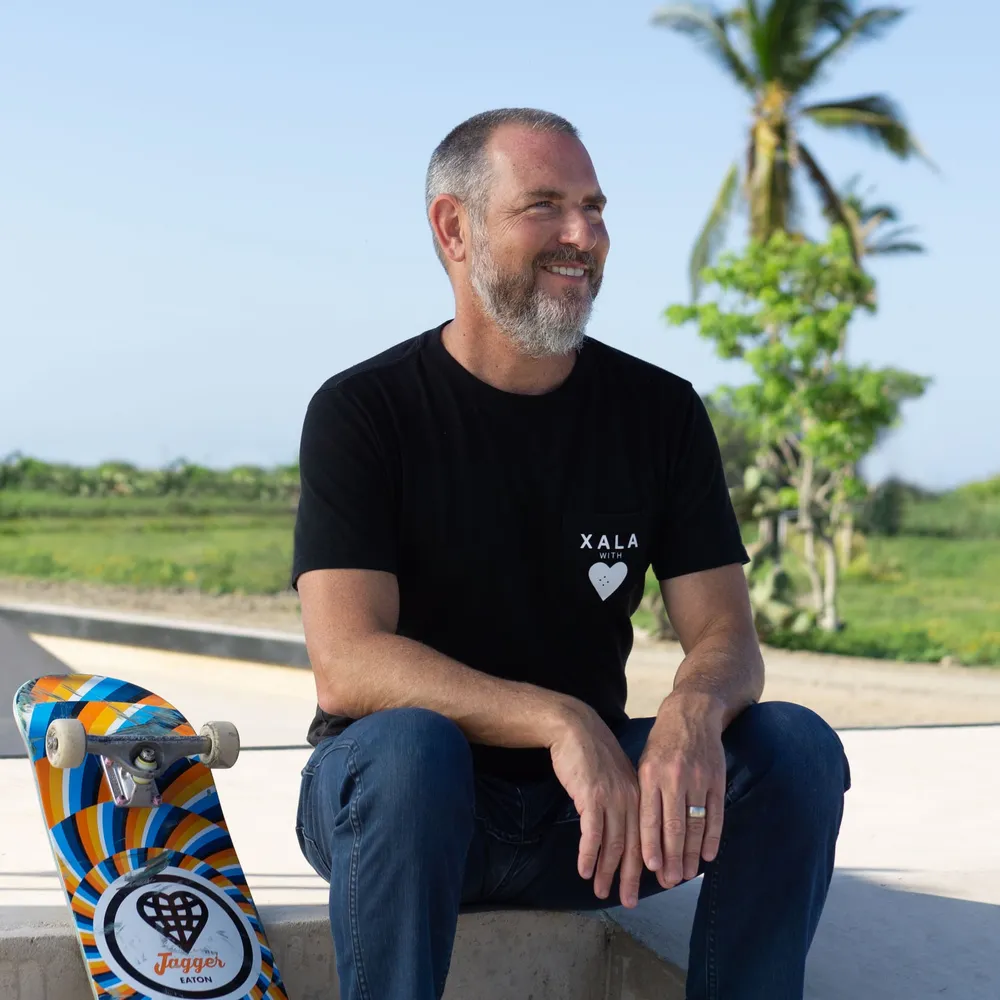
The founder, Johnny Schillereff, left Element in January 2021. He has said that after so many acquisitions, decisions drifted away from what the brand had been. In 2020 he started a new brand with his wife, Kori, The Heart Supply, and in 2022 he was named chief executive of USA Skateboarding, the American federation.
The big team years: Bam, Vallely and Nyjah
With Billabong behind it, Element grew enormously in the 2000s, and its team was one of the best known in the world.
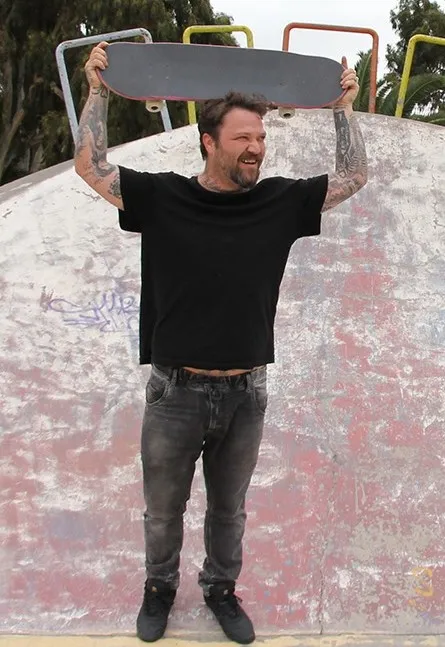
Bam Margera joined in the early 2000s, just as Jackass was making him famous outside of skateboarding. His decks with the Heartgram, the heart with a pentagram, sold like crazy, and in 2017 the brand reissued ten of his graphics for the 25th anniversary. Mike Vallely was on the team for much of the decade, until 2010. Chad Muska, Ray Barbee, Bucky Lasek, Jeremy Wray, Tosh Townend and Mark Appleyard also came through.
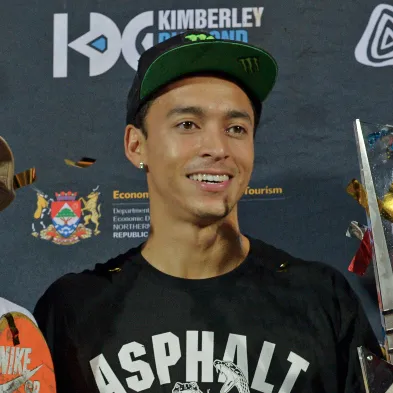
Nyjah Huston had Element as his first sponsor at just 7 years old, in 2002. He left in 2008, came back in 2011 with the video Rise & Shine and spent ten more years with the brand, by then as one of the best street skaters in the world. In January 2021 he announced he was leaving, one day before Schillereff himself.
In the 2010s the team became more international and more street: Evan Smith, Brandon Westgate, the Latvian Madars Apse, the Finn Jaakko Ojanen, Nick Garcia or Tom Schaar. Transworld named Element team of the year in 2013 and 2014, and in 2017 it won King of the Road, Thrasher’s tour contest, ahead of Real and Foundation.
Element videos
| Year | Video | What’s in it |
|---|---|---|
| 1993-94 | Skypager and Fine Artists Vol. 1 | The early days, with Harold Hunter and a very young Stevie Williams |
| 1998 | Third Eye View | Tim O’Connor, Rob Pluhowski and Reese Forbes |
| 2000 | World Tour | The team on tour with Natas Kaupas |
| 2005 | Elementality Volume One | The first big video in six years |
| 2006 | Elementality Volume Two | Nyjah, Bucky Lasek, Bam, Vallely and Jeremy Wray |
| 2007 | This Is My Element | Bam, Chad Muska, Nyjah and Ray Barbee |
| 2011 | Rise & Shine | Nyjah’s return |
| 2013 | Soul Rebel | Mark Appleyard’s part |
| 2016 | New World Element | Five chapters: Brazil, Japan, Australia, Canada and Europe |
| 2018 | Peace | With parts from Madars Apse and Jaakko Ojanen |
| 2021 | E.S.P. and Nature Calls | The first ones after Nyjah’s exit |
| 2022 | E.S.P. Vol. 2 | For the 30th anniversary, filmed in Paris, Mexico City, Finland and the United States |
If you like skate videos, here’s a list of the best skate videos of all time.
Element in Europe
Element has a closer relationship with Europe than most American brands. Its European base has been on the French Basque coast for years, and in March 2011 it opened its own store in Barcelona, shortly before the Plymouth and Paris ones. The team has come on tour to Spain several times, mostly the north and Barcelona.
The most curious part is where its most special deck is made. The Section C.B.N. is built at HLC, a family-run factory of the Iraola brothers in the Oiartzun valley (Gipuzkoa), less than 30 kilometers from the brand’s European headquarters. Today Element Europe runs separately from the American side, with a team that leans heavily European: the Frenchman Vincent Milou, an Olympian in Tokyo and Paris, signed in 2025, and the Belgian Phil Zwijsen runs the European team.
Element decks and their technologies
All Element decks are seven-ply maple. What changes between lines is how those plies are built:
| Line | What it’s like | Who it’s for |
|---|---|---|
| Regular | Seven plies of Canadian maple | Any skater |
| Featherlight | Thinner veneers and a reinforced tail | Anyone who wants a lighter deck with pop |
| Twig | Even lighter | Kids and lightweight skaters |
| Helium | Five air chambers between two veneers | Anyone after the brand’s lightest deck |
| Thriftwood | Undyed veneers, less chemistry | Anyone who prefers a slightly stiffer deck with less treatment |
| Section C.B.N. | FSC maple, water-based varnish and glue, made in the Basque Country | Anyone who wants the lowest-impact option |
The Section C.B.N. (short for Conscious By Nature) is the most interesting one. Element developed it over two years with the HLC factory: the wood is FSC certified, the varnish and glue are water-based, the veneers are undyed, the graphic is a single ink and laser-engraved, the packaging is made of corn and the deck carries an engraved QR code. The brand’s own life-cycle analysis puts it at 43% less climate impact than a traditional deck. The team says it skates just like any other. In the UK it costs about £60 on the brand’s website, and Element committed to sharing the method with the rest of the industry.
Common sizes run from 7.5 to 8.5 inches wide, with a length of about 31.25 to 32 inches. If you’re not sure what width to pick, our guide to choosing a skateboard deck explains it based on your shoe size and how you skate.
Completes
Element sells completes with its own trucks and 50 to 52 mm, 99A wheels, and in the United States many cost under $100. They’re among the easiest boards to find to get started. The deck is good; what most often falls short on any budget complete is the trucks and the bearings.
Big-box Elements
In the United States there is a line of toy skateboards carrying the Element brand under license and sold at big-box stores. They aren’t the same decks you’ll find in a skate shop. If you see a very cheap Element outside of a specialist shop, keep that in mind.
What Element does beyond decks
- Elemental Awareness: an organization that started in the early 2000s to bring city kids closer to nature through skating. Element sponsored a camp at Sequoia Lake (California) with the YMCA.
- Make It Count: a circuit of amateur contests the brand ran in about twenty countries.
- No Board Left Behind: a program to turn old decks into cruisers.
- Collaborations: with National Geographic, Nigel Cabourn, Millet, Star Wars or Polo Ralph Lauren, which put out a skate-inspired collection with the brand in fall 2025.
- Apparel and shoes: Element sells backpacks, technical clothing, streetwear and a women’s line that the brand says was one of the first from a skate brand, in the year 2000.
Element vs other deck brands
On deck quality, a seven-ply Element is comparable to those from Baker, Real, Almost or Enjoi: they all use seven-ply maple and you’ll notice the difference more in the shape, the concave and the graphic you pick than in the wood. Three things set Element apart: it’s much easier to find, it has a very wide range of completes for getting started, and it’s the brand doing the most serious work on lower-impact decks with the Section C.B.N.
Baker is a smaller brand, focused on street decks and its team, and it doesn’t sell in big-box stores. Santa Cruz and Powell Peralta have more history and their own reinforced constructions (VX and Flight). If you want to see more comparisons, we have a comparison of the best deck brands.
Who is an Element deck for?
- If you’re starting out: an Element complete is a good way to begin, especially if you buy it at a skate shop. We cover everything in the skateboarding for beginners guide.
- If you’re small or light: the Twig or the Featherlight will be easier to move around.
- If impact matters to you: the Section C.B.N. is probably the most carefully developed production deck in that sense, and it’s made in the Basque Country too.
- If you want a small skater-run brand: Element today is part of a big licensing group. Its team is still good, but if supporting an independent brand is what matters to you, there are other options.
Frequently asked questions
Who owns Element Skateboards?
The brand belongs to Authentic Brands Group, which bought Boardriders (Quiksilver, Billabong, DC, Element...) in 2023 and runs it through licensing. In Europe, Element has been managed since 2025 by a different group than the US one, based in France.
Is Element bankrupt?
No. In February 2025 Liberated Brands, the company that ran the Element stores in the United States under license, went under, and those stores closed. The brand still sells decks, has a team and puts out videos.
Where is Element from and who founded it?
It started in 1992 in Atlanta, Georgia, as Underworld Element, founded by Johnny Schillereff and the artist Andy Howell. Soon after it dropped the 'Underworld' and in 1995 it launched the tree logo.
What does the Element logo mean?
The tree stands for growth, roots and a connection with nature. The circle is the planet and the community that brings the city and the forest together. And the name comes from the four elements: earth, water, fire and air.
Are Element decks good for beginners?
Yes. They are 7-ply maple decks like those from any good brand, and Element completes are among the easiest to find. If you buy a complete, it's worth upgrading the trucks and bearings down the line.
Where are Element decks made?
The Section C.B.N. line is made at HLC, a family-run factory in the Oiartzun valley in the Basque Country. The brand doesn't say which factory makes the rest of its decks; they are 7-ply Canadian maple.
Are the Element boards sold at big-box stores the same?
No. In the United States there is a line of toy skateboards licensed under the Element name for big-box stores. They have nothing to do with the decks sold in skate shops.
Is Nyjah Huston still on Element?
No. Nyjah had Element as his first sponsor at age 7, left in 2008, came back in 2011 and left for good in January 2021, one day before the founder, Johnny Schillereff, left too.
What is Element's Featherlight technology?
It's a 7-ply maple deck with thinner veneers and a reinforced tail, so it weighs less without losing pop or durability. The Twig is an even lighter version for smaller skaters.