
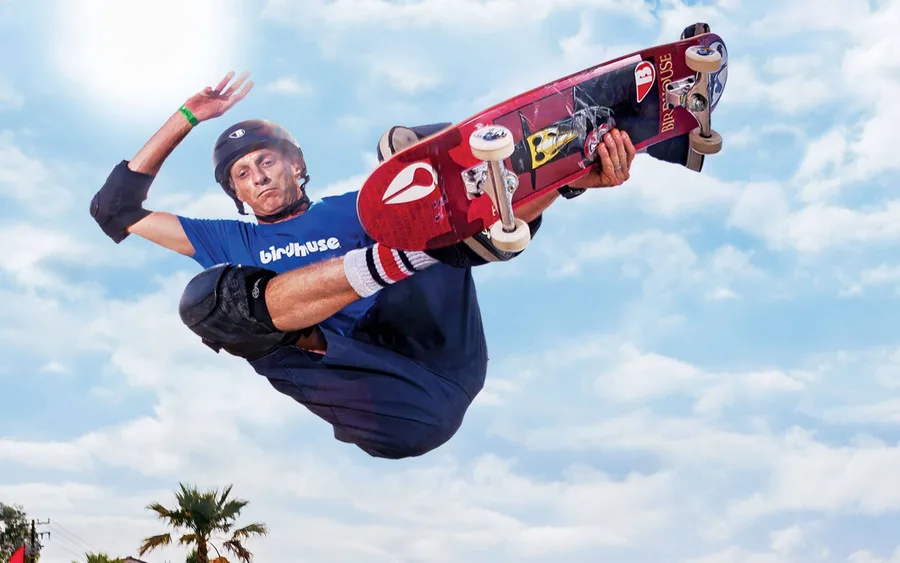
Making a list of the greatest skaters of all time is a trap. Skateboarding is subjective, there are multiple disciplines (street, vert, freestyle, park, mega ramp, bowl), and every era has its own kings. Still, some names have drawn a clear line between before and after: by inventing tricks everyone does today, by defining an era with their style, or by bringing skateboarding to a mass audience.
This is our ranking of 42 essential skaters, organized by era. You can filter by decade, country or style to find the references that matter most to you.
70s
Tony Alva
 USA Pool / VertPioneerLegend

Tony Alva, Santa Monica (1957), is one of the original Z-Boys: the crew that took surf culture, dropped into empty Los Angeles pools during the '76 drought, and reinvented skating before the word "vert" even existed.
Alongside Jay Adams and Stacy Peralta, he brought surf fluidity to asphalt. His style was the opposite of the clean freestyle that ruled the era: fast, aggressive, no frills. Posture, presence, and speed.
In 1977 he founded Alva Skates, the first skater-owned board company. Until then, brands belonged to sponsors; Alva was the first to understand that the skater could own the business. That move opened the door for Hawk to start Birdhouse years later, or Gonzales to launch his Krooked.
Even though skating today gets associated with street, Alva represents the genetic line that runs from surf to pools and from there to modern vert. No Z-Boys, no Tony Hawk on a ramp.
He's still skating and staying present in the scene pushing 70. The word "attitude" gets thrown around a lot when people talk about him, but in his case it describes exactly what went down: he changed how skaters positioned themselves toward the sport and toward the industry. Everything else followed.
Jay Adams
USA Pool / VertZ-BoysLegend 
Jay Adams, born on February 3, 1961 in Santa Monica, California, was one of the most authentic and rebellious figures in old school skateboarding. A founding member of the legendary Z-Boys team, he brought surf energy to the asphalt with a raw, revolutionary style.
Adams was the soul of Dogtown, deeply influencing the way skate was perceived: more than a sport, a way of life. His free and aggressive style changed the rules of the game and left an indelible mark on the urban culture of the 70s.
His legacy goes beyond tricks: Jay Adams embodies the pure essence of skate, the freedom and rebellion that gave rise to an entire movement.
He died in 2014, at 53, of a heart attack during a surf trip in Mexico. Skateboarding said goodbye to him as what he was: the soul of Dogtown.
Stacy Peralta
USA Pool / VertManagerLegend 
Stacy Peralta, born October 15, 1957 in Venice, California, is a central figure in skateboarding history. As a member of the Z-Boys and founder of the Bones Brigade, he helped professionalize the sport and push it to a global audience.
Peralta didn't just stand out as a skater — he also made his mark as a director and producer. His documentaries, like Dogtown and Z-Boys and Riding Giants, are considered essential viewing for anyone who wants to understand skate and surf culture.
Visionary, mentor, storyteller — Stacy Peralta is an indispensable voice for understanding how skate went from the streets of Venice to becoming a worldwide cultural phenomenon.
Alan Gelfand
USA Pool / VertInventorLegend 
Alan Gelfand, born in 1963 and raised in Hollywood, Florida, invented the ollie — the trick practically all of modern skateboarding is built on. In the late '70s, skating Florida's bowls, he discovered he could pop the board off the surface without grabbing it, using only back-foot pressure on the tail.
Stacy Peralta saw it and recruited him as the first member of Powell-Peralta's Bones Brigade. The nickname had come years earlier from a Florida friend: "Ollie". The trick inherited the name and it stuck forever.
He retired young, but his contribution has no real comparison: without the ollie there's no street skating, no kickflip, none of what we understand today as skateboarding. Rarely has a single idea created an entire language.
Christian Hosoi
USA Vert / ParkStyleLegend 
Christian Hosoi, born October 5, 1967 in Los Angeles, was the great star of '80s vert alongside Tony Hawk — their rivalry, style versus technique, filled contests for the entire decade.
Hosoi was height, aesthetics and pure charisma. His signature trick, the Christ Air, is one of the most iconic images in skateboarding history, and his brand Hosoi Skates helped define the era. Where Hawk was precise, Hosoi flew.
His fall was just as public: addiction and four years in prison in the early 2000s. He came out, rebuilt himself, and returned to skateboarding as a mentor and respected figure — he still skates today. A genuine redemption story, no embellishment needed.
Mark Gonzales
USA StreetArtLegend 
Mark Gonzales, known as "The Gonz", was born on June 1, 1968, in South Gate, California, and is considered the pioneer of modern street skate. His creativity and free spirit transformed the way skateboarding was understood in the 80s.
Gonzales was one of the first to take skate to the streets, introducing the idea that any surface could be a spot. He founded Blind Skateboards and appeared in iconic videos like Blind's Video Days, which defined a generation.
Beyond skating, he's a visual artist and poet, which reflects his unique approach to the sport. His cultural influence and vision turned him into a true legend within skateboarding.
80s
Rodney Mullen
USA StreetTechnicalLegend 
Rodney Mullen, Gainesville, Florida (1966), is the person who has invented more tricks than anyone else in the history of skateboarding. No exaggeration. The modern kickflip (1983), the heelflip, the 360 flip, the impossible, the darkslide. Any flatground trick some kid is throwing down in their neighborhood today was probably invented by him.
He came to skating through freestyle — the least popular discipline, but the one that let you approach each trick as a physics problem. That's exactly how Mullen's mind worked: how the board rotates, which foot does what, how to translate a freestyle movement to a street with curbs. He'd train 8-10 hours a day, alone, in empty parking lots.
At 14 he won his first world title. By 16 he was the undisputed reference point for freestyle. But freestyle started dying out in the late '80s and Mullen had to reinvent himself: he went all-in on street and transferred every one of his flatground tricks to stairs and rails.
He co-founded Almost Skateboards with Daewon Song, another legend of tech street. His part in Almost Round 3 (2004) is still study material: stuff like kickflip underflips and caspers that people are still trying to break down move by move.
Off the board, he's given TED talks and lectures on creativity, engineering, and learning. He's one of the few skaters who've actually managed to get the academic world to take notice.
Tony Hawk
USA Vert / ParkLegend 
Tony Hawk, San Diego (1968), is probably the most media-friendly skater in history. Not because he's the most technical or the most purist — there are lists for all that — but because he was the face that pulled skate out of the subculture and dropped it into every Walmart on the planet.
As a kid he was scrawny, hyperactive, and obsessive. By 14 he was already competing as a pro, and by the late '80s he was dominating vert with a technique that combined the height of the Z-Boys with an almost textbook-level precision.
The moment that defined his career — and with it the mainstream image of skate — was the 900 at the 1999 X Games: two and a half rotations in the air. It took him eleven attempts. When he landed it, the whole world found out.
He rode the wave smart. He founded Birdhouse Skateboards, launched the Tony Hawk's Pro Skater video game franchise (1999) that sold tens of millions of copies and taught tricks to an entire generation that had never touched a board, and started The Skatepark Project to build public parks in under-resourced neighborhoods.
Some purists give him grief for being "too clean" or "too mainstream." They're not entirely wrong, but they also seem to forget that without Hawk the industry wouldn't be anywhere near the size it is today. Hard to have it both ways.
Steve Caballero
USA Vert / ParkBones BrigadeLegend 
Steve Caballero, born November 8, 1964 in San José, California, is a living legend of vert skateboarding and one of the most iconic members of the Bones Brigade team.
Inventor of the Caballerial (a fakie 360), Caballero has built an exceptionally long career that blends technique, creativity, and humility. He was a world champion in the '80s and is still active today, riding for Powell Peralta and Vans.
His influence stretches into music and art, reflecting the essence of skate as a way of life. Caballero is a testament to consistency and unbreakable passion.
Mike McGill
USA Vert / ParkBones BrigadeLegend 
Mike McGill, born in 1964 and raised in Florida, is a key figure in vert skateboarding and a standout member of the legendary Bones Brigade team. His biggest contribution to the sport was inventing the McTwist, the 540-degree spin he first pulled in 1984 on a ramp in Rättvik, Sweden — and that changed what was possible on vert in the '80s.
With his mix of technique, guts, and creativity, McGill pushed the limits of what could be done on vertical. His appearances alongside Tony Hawk and Steve Caballero in contests and videos made him a reference point for generations of skaters.
Today, his name remains synonymous with innovation and respect in classic skate, remembered for opening new doors in aerial skateboarding.
Lance Mountain
USA Vert / ParkBones BrigadeLegend 
Lance Mountain, born June 13, 1964 in Pasadena, California, is a core figure in vert skateboarding and a member of the legendary Bones Brigade team. Known for his creativity, humor, and versatile style, he's been a genuine ambassador for skating since the '80s.
Mountain held his own on ramps and in the streets alike, appearing in landmark videos alongside Tony Hawk and Steve Caballero. His presence always captured the most human and fun side of skate culture, inspiring thousands of skaters around the world.
More than four decades in, he's still a respected voice and living proof that skating can be a lifelong obsession.
Natas Kaupas
USA StreetPioneerLegend 
Natas Kaupas, born in 1969 in Santa Monica, California, was one of the great innovators of street skateboarding during the 80s. His artistic, experimental, and creative style influenced an entire generation of skaters.
As one of the first skaters to take skating to the streets in an expressive way, Natas pulled off pioneering tricks like the Natas Spin and used urban furniture as a platform for maneuvers. His time with Santa Monica Airlines and Venture Trucks was a turning point for street skate.
An artist and designer as well as a skater, Kaupas represents the union between creativity and technique. His approach inspired figures like Mark Gonzales and laid the foundations of street skating as we know it today.
90s
Eric Koston
USA StreetTechnical 
Eric Koston, born April 29, 1975 in Bangkok, Thailand, and raised in California, is an absolute benchmark in technical street skateboarding. His creativity and mastery of the most complex tricks have cemented him as one of the most respected names in modern skate.
He started with H-Street, went through 101, and ended up as one of the historic pillars of Girl. Known for his precision and fluidity, Koston became a key figure in the evolution of urban skate. He's also co-founder of The Berrics, one of the most influential spaces in the international scene.
With a career that blends talent, humor, and professionalism, Eric Koston is a genuine authority within skate culture and a testament to longevity at the top of the sport.
Andrew Reynolds
USA StreetGapsBaker 
Andrew Reynolds, born June 6, 1978 in Lakeland, Florida, is one of the most respected figures in street skateboarding. He started on Birdhouse, Tony Hawk's team, where he became the young star of videos like The End.
In 2000 he founded Baker Skateboards with Jay Strickland, and the brand defined an era with its raw attitude and unfiltered aesthetic. His frontside flip — probably the most imitated in history — and his command of big stair sets earned him the nickname "The Boss".
More than two decades later he still runs Baker and the Baker Boys distribution house, the de facto head of a family of brands (Deathwish, Shake Junt) that keeps the spirit of the 2000s alive. Longevity, leadership, and a trick turned signature.
Elissa Steamer
USA StreetWomen pioneer Elissa Steamer, born July 31, 1975 in Fort Myers, Florida, was one of the first women to gain worldwide recognition in professional skateboarding. Her courage and talent opened the door for an entire generation of skaters who look up to her as a true pioneer.
She started turning heads in the late '80s, quickly making a name for herself with a fearless, no-nonsense style. She was the face of Toy Machine's golden era, appearing in some of the most influential street skateboarding videos of the '90s. In 1999 she made history as the first woman included in the video game Tony Hawk's Pro Skater.
A winner on the international contest circuit and respected for keeping it real, Elissa Steamer embodies the free spirit and drive that have pushed women's skateboarding onto the world stage.
Today she runs her own brand, Gnarhunters, and is still skating decades after opening the door.
Daewon Song
 KOR StreetCreativeTechnical

Daewon Song, born February 19, 1975 in Seoul, South Korea, and raised in California, is one of the most technical and innovative skaters in history. His unique, fluid, and creative style has redefined street skateboarding for over three decades.
Song rose to fame through his appearances in World Industries videos and later through his collaboration with Rodney Mullen at Almost Skateboards. He's known for his incredible board control, his use of small obstacles, and his ability to invent impossible combinations.
Winner of Thrasher Magazine's Skater of the Year award in 2006, Daewon is admired as much for his humility as for his talent. He represents the balance between technique and passion, and his legacy places him firmly among the greatest skaters in history.
Chris Cole
USA StreetPower 
Chris Cole, born March 10, 1982 in North Carolina and raised in Pennsylvania, is one of the most consistent and technical skaters in street skateboarding. Thrasher named him Skater of the Year twice (2005 and 2009) — something very few have achieved.
His career took off at Zero, Jamie Thomas's brand, where he built a perfectionist's reputation: 360 flips down stair sets nobody else would touch, and big rails handled with a cleanliness rare in that terrain. He later moved to Plan B and has ridden for Fallen and DC Shoes.
Respected as much for his level as for his work ethic, Cole is one of the few who have dominated the contest circuit and actual street skating at the same time.
Jamie Thomas
USA StreetEntrepreneur 
Jamie Thomas, born October 11, 1974 in Dothan, Alabama, is a street skating legend of the '90s and one of the most influential businessmen skateboarding has produced. His intensity on every trick made him the icon of pure determination on a board.
Nicknamed "The Chief", he founded Zero Skateboards and directed era-defining videos like Misled Youth and Thrill of It All. His attempt at the Leap of Faith — a near-impossible drop in San Diego — became the symbol of how he understood skateboarding: all or nothing.
Running Zero and the Black Box distribution for years, Thomas mentored entire generations (Chris Cole among them). Passion, work ethic, and a crystal-clear vision of what it means to live for skateboarding.
Tom Penny
 GBR StreetStyle

Tom Penny, born April 13, 1977 in Oxford, England, is a legendary figure in European skate. Known for his relaxed, natural, and elegant style, Penny redefined what fluidity meant in street skateboarding during the 90s.
A member of Flip Skateboards and éS Footwear, he earned worldwide respect for his seemingly effortless talent. His tricks at Southbank and Radlands are living history of British skate.
Tom Penny is synonymous with pure style: a skater who turned simplicity into art and left an undeniable mark on global skate culture.
Geoff Rowley
GBR StreetGaps / Rails 
Geoff Rowley, born June 6, 1976 in Liverpool, England, embodies the essence of raw, high-risk skating. His fearlessness attacking impossible rails and gnarly drops made him one of the most respected skaters of his era.
His rise came through Flip Skateboards, where he starred in landmark videos like Sorry and Really Sorry. In 2000 he was named Skater of the Year by Thrasher Magazine, cementing his reputation as one of the most intense and committed skaters on the planet.
Rowley blends technical ability with sheer determination, and his influence carries through every new generation that looks to him as a benchmark for pure passion in skateboarding.
Bam Margera
USA StreetMedia 
Bam Margera, born September 28, 1979 in West Chester, Pennsylvania, is the skater who took the leap into pop culture further than anyone. An Element pro for years, he could genuinely skate: his parts in the CKY videos he filmed with his friends mixed serious tricks with the chaos that would later make him famous.
From there came Jackass, then Viva La Bam: by the mid-2000s, Bam was probably the best-known skater on the planet among people who had never set foot in a skatepark. That exposure brought thousands of kids into skateboarding, even if the purists never quite forgave him for it.
His later personal struggles are well documented and have marked his life. But his role in skateboarding history is clear: nobody did more — for better and for messier — to put a skateboard on every TV screen.
Bob Burnquist
 BRA Vert / MegaInnovator

Bob Burnquist, born October 10, 1976 in Rio de Janeiro, is the ramp legend who never stopped experimenting. Raised between Brazil and California, he burst onto the scene in the '90s doing something almost nobody did: skating vert in switch with complete naturalness.
He stacked X Games medals for two decades — he's among the most decorated athletes in the event's history — and turned the mega ramp into his personal laboratory: in 2010 he landed the first fakie 900, on the mega ramp in his own backyard in Vista, California. Yes, he has a mega ramp in the backyard.
Off the board he's an ambassador for the sport and an environmental advocate. Burnquist represents ramp skating's most creative side: less formula, more "what if we tried this?".
2000s
Paul Rodriguez
USA StreetCompetition 
Paul Rodriguez, known as P-Rod, was born on December 31, 1984, in Tarzana, California. He's a key figure in modern street skateboarding, recognized for his clean technique and elegant style.
Son of comedian Paul Rodriguez, he started skating as a kid and quickly signed with Girl Skateboards. He later founded his own brand, Primitive Skateboards, and became one of the top athletes for Nike SB, with several shoe models bearing his name.
A multiple title winner with a long-standing career, P-Rod is respected for his work ethic and professional approach. His influence goes beyond the sport itself: he represents consistency and progression within modern skate.
Ryan Sheckler
USA StreetCompetitionMedia 
Ryan Sheckler, born December 30, 1989 in San Clemente, California, is one of the most recognized skaters in street skateboarding and a media figure in the sport since childhood. At 13 he was already competing in the X Games, where he won his first gold medal.
Sheckler combined charisma, talent and consistency, becoming one of the first skaters to reach international fame beyond the ramps. He skated for Plan B, Red Bull and Oakley, starring in shows and videos that brought skating to a massive audience.
After years of successes and personal challenges, Ryan stays active and committed to authentic skating. He's a reference point for resilience, growth and a genuine love for the board.
Chris Haslam
 CAN StreetCreative

Chris Haslam, born December 19, 1980 in Niagara Falls, Canada, and partly raised in Singapore, is one of the most creative skaters alive. His experimental approach — tricks nobody quite knows how to name — made him an admired oddity inside and outside competition.
He blew up on Almost alongside Rodney Mullen and Daewon Song, the perfect team for someone like him: his part in Almost Round 3 (2004) mixed advanced technique with ideas that seemed imported from another sport. The beard and the humor did the rest to make him a cult figure.
More artist than competitor, Haslam represents creativity in its purest form: proof that skateboarding still has room left to invent.
Torey Pudwill
USA StreetPowerTechnical 
Torey Pudwill, a Californian from the 2010s wave of technical street skating, is one of the era's key names. His Bigger Bang part (2011) was among the most rewatched of his generation: extra-long grinds, ledge combinations nobody had tried, and an unusual amount of pop.
A longtime Plan B pro, he's also the founder of Grizzly Griptape, one of the best-selling grip brands in the world — one of the few times a skater has turned an accessory into a global business.
He's not a contest skater: his territory is video parts, ledges and plazas. There, he's still a reference point.
Shane O’Neill
 AUS StreetTechnical

Shane O'Neill, born January 3, 1990 in Melbourne, Australia, is one of the biggest names in modern technical skating. His control and flawless execution have made him a global reference in street skateboarding.
Known for complex tricks like the switch 360 double flip and the nollie back heel, Shane has left his mark at competitions like Street League and the X Games. He founded his own brand, April Skateboards, pushing forward a new generation of skaters.
Reserved and precise, O'Neill is the perfect example of how technical mastery and composure can push skating to an almost artistic level.
Luan Oliveira
BRA StreetSpeed 
Luan Oliveira, born September 22, 1990 in Porto Alegre, Brazil, is one of the biggest stars in contemporary street skateboarding. His fast, powerful, and highly technical style has made him a global reference point in modern skate.
He stood out for his natural talent from an early age. By 10 he was already competing in national events, and soon caught the attention of international brands like Flip Skateboards and Nike SB. Known for his consistency and precision, Luan won the Tampa Am — the world's biggest amateur contest — before settling in as a Street League finals regular.
His style blends fluidity with explosive power, pulling off complex tricks with impressive ease. On top of that, his humble attitude and connection to his Brazilian roots make him a genuinely beloved figure in the skate community.
Sewa Kroetkov
 RUS StreetTechnical

Sewa Kroetkov, born in Russia in 1990 and raised in the Netherlands, is one of the finest technical skaters Europe has produced. His board control and methodical approach made him a reference point for modern flatground skating.
He made his name with Blind Skateboards and became known worldwide through Battle at the Berrics, where his switch and nollie variations made him one of the most feared opponents in the game. Red Bull signed him, and his trick videos rack up millions of views.
Discipline and creativity in equal parts: Sewa proves that precision can be a spectacle too.
Bastien Salabanzi
 FRA StreetPower

Bastien Salabanzi, born in 1985 in the south of France, was Europe's great street prodigy of the early 2000s. Riding for Flip Skateboards at barely 16, he was winning international contests with a casualness that unsettled the Americans.
His parts in Sorry and Really Sorry — big flips, enormous 360 flips, switch tricks from another planet — put him among the world's best while still a teenager. Then came an irregular stretch, half-retirements and comebacks, which cost him part of the career he seemed headed for.
His place is secure regardless: he was the first European of his generation to prove you could compete head-to-head with the Californian elite, and he opened the road for those who came after.
Nyjah Huston
USA StreetCompetition 
Nyjah Huston, born November 30, 1994 in Davis, California, is one of the most dominant competitors in professional street skateboarding. With multiple titles at Street League Skateboarding and medals at the X Games, he's set new standards for technical perfection.
Known for his discipline and consistency, Nyjah combines power, precision, and absolute control. His competitive drive and aggressive style have made him a worldwide reference. He skates for Disorder Skateboards, his own brand, alongside a collaboration with Nike SB.
Beyond his athletic side, Huston represents the professionalization of modern skate, with a solid career and an influence that reaches across generations.
At Paris 2024 the Olympic medal that had slipped away in Tokyo finally came: bronze in street, in a final decided by tenths of a point.
PJ Ladd
USA StreetTechnical 
PJ Ladd, born July 11, 1983 in Boston, Massachusetts, rose to fame in the early 2000s with his video PJ Ladd's Wonderful Horrible Life, widely considered one of the most impactful parts in street skateboarding history.
His flawless technique, paired with precision and natural style, redefined technical skating. Ladd has ridden for brands like Plan B, Lakai, and DC Shoes, and is respected for making incredibly complex tricks look effortless.
Reserved and relentlessly precise, PJ Ladd has earned the skate community's respect as a technical benchmark and a symbol of quiet, uncompromising dedication to the craft.
2010s
Ishod Wair
USA StreetStyle 
Ishod Wair, born November 1, 1991 in Bordentown, New Jersey, is a perfect example of elegance and style in contemporary skateboarding. His fluidity on the board and his versatility have made him one of the most respected figures in the current scene.
A member of Real Skateboards and sponsored by Nike SB, Ishod combines power with creativity, adapting naturally to any terrain. In 2013 he was named Skater of the Year by Thrasher Magazine, a recognition of his talent and consistency.
With a relaxed and authentic style, Wair represents the new generation of skaters who manage to balance technique, attitude, and a genuine connection to street culture.
Tiago Lemos
BRA StreetPower / Switch 
Tiago Lemos, born April 26, 1991 in Jaguariúna, Brazil, is known for his power and unmistakable style in street skateboarding. His technique on big tricks and his control on ledges and rails have made him a crowd favorite.
Part of the Primitive Skateboards and New Balance Numeric teams, Tiago combines strength, elegance, and absolute mastery of switch stance. His video parts have blown up the whole community, cementing him as a benchmark for heavy, technical skating.
With humility and drive, Lemos represents the best of Brazilian skateboarding and the natural evolution of street style at the professional level.
Louie Lopez
USA StreetAll-round 
Louie Lopez, born November 26, 1994 in Los Angeles, is one of the most complete and respected skaters of his generation. He joined Flip at around ten years old — the child prodigy of the team's last golden stretch — and grew up on camera until turning pro.
In 2019, after more than a decade, he left Flip and joined FA World Entertainment (Fucking Awesome), Jason Dill and AVE's brand. He has a signature shoe with Converse, and parts like Days of Grace (2021) confirmed what everyone suspected: enormous technique without a gram of pose.
No noise, no drama, and a style that looks effortless — Louie is the example of how to age well inside professional skateboarding.
Miles Silvas
USA StreetTechnical / Switch 
Miles Silvas, born October 17, 1995 in Sacramento, California, embodies the elegance of modern technical street skating. His precise, fluid, seemingly effortless style has placed him among the most respected names in the current scene.
He came up through Organika and Primitive, then became a key piece of Numbers Edition, Eric Koston and Guy Mariano's project. In 2023, Thrasher named him Skater of the Year — the most serious award in skateboarding — after a year of video output that left no room for debate.
His control on rails and ledges is impeccable, power and style working together. Off the board, one of the calmest, most consistent professionals around.
Leticia Bufoni
BRA StreetCompetition 
Leticia Bufoni, born April 13, 1993 in São Paulo, Brazil, is one of the biggest ambassadors of international women's skateboarding. Her charisma, talent, and competitive mindset have taken her to the top of street skateboarding.
She started skating as a kid and quickly stood out for her technique and determination. She's won multiple medals at the X Games and was part of the Brazilian Olympic team at Tokyo 2020. Sponsors like Nike SB and Red Bull back her position as one of the most recognized athletes on the circuit.
Bufoni combines power with style and represents the push of women's skateboarding into the global elite, inspiring a new generation of skaters.
Today
Yuto Horigome
 JPN StreetOlympic Gold

Yuto Horigome, born in 1999 in Tokyo's Koto ward, is the defining skater of the Olympic era. At Tokyo 2020 he won the first Olympic gold medal in skateboarding history — in street, in his home city, a few kilometres from the spots where he learned to skate with his dad.
At Paris 2024 he did it again, coming back on the final trick of the final to become the only skater with two Olympic street golds. In between: Street League wins and a level of rail technique very few can match — his nollie and switch tricks down big rails are some of the cleanest ever filmed.
He rides for April Skateboards and Nike SB. Quiet off the board and surgical on it, Horigome represents something that seemed impossible twenty years ago: street skating's centre of gravity no longer living only in California.
Rayssa Leal
BRA StreetOlympic Podium 
Rayssa Leal, born January 4, 2008 in Imperatriz, Brazil, is one of the biggest names in women's skateboarding worldwide. Known as "A Fadinha" (the Fairy), she won over audiences with her talent, charisma, and maturity on the board from a very young age.
She went viral at 7 for landing a heelflip dressed as a fairy, and by 13 she was already a silver medalist at the 2020 Tokyo Olympics. She rides for Team Nike and April Skateboards, and stands out for her technical, fluid, and joyful style.
Rayssa represents the new generation of professional skateboarding — combining raw talent, discipline, and an infectious energy that's reshaping the image of women's skate across the world.
At Paris 2024 she added a second Olympic medal, taking bronze, and April turned her pro with her own board. Two Games, two medals — all before turning 17.
Sky Brown
GBR ParkOlympic Podium 
Sky Brown, born July 12, 2008 in Miyazaki, Japan, is one of the youngest and most charismatic athletes in international skateboarding. Representing Great Britain, she became the youngest Olympic medallist in the country's history.
With a fearless, joyful style, Sky holds her own in both park skate and vert, combining technical tricks with a positive attitude that has inspired millions of young people. She's part of the new generation redefining what women's skateboarding looks like.
Beyond her talent, Sky Brown represents the future of the sport: energy, determination, and a genuine love for the board.
At Paris 2024 she repeated with another bronze in park. Two Games, two medals — and she still hadn't turned 17.
Keegan Palmer
AUS ParkOlympic Gold 
Keegan Palmer, born March 12, 2003 in San Diego, California, and raised in Australia, is one of the most promising young talents in park skateboarding. His fluidity in the air and control on the ramps have made him a reference point in modern skate.
Palmer won the gold medal at the 2020 Tokyo Olympics, representing Australia with an elegant and explosive style. He combines technique, power, and flawless execution that sets him apart in every competition.
With just a few years of professional career under his belt, Keegan Palmer embodies the new generation of skaters who bring together natural talent, discipline, and a genuine connection to the spirit of skate.
At Paris 2024 he defended his title with a huge margin over the rest of the final, becoming the first skater with two Olympic park golds. In his discipline, right now, he's the man to beat.
Jagger Eaton
USA Street / ParkPodiums 
Jagger Eaton, born on February 21, 2001 in Mesa, Arizona, is one of the most prominent young figures in competitive skateboarding. His professionalism and maturity have allowed him to reach historic achievements at an early age.
At 11 he was already competing at the X Games, and at the 2020 Tokyo Olympic Games he won the bronze medal in the street category, proving his talent against the best in the world. His style combines power, technical precision and flawless execution on every trick.
Eaton represents the new era of professional skate: discipline, ambition and respect for the tradition of a sport that keeps evolving without losing its soul.
At Paris 2024 he went one step further: silver in street, behind only Yuto Horigome. Two Games, two medals, and a contest consistency very few can match.
No skaters match those filters.
How we chose these 42 skaters
This isn’t a ranking by contest results. We weighted three criteria:
- Technical innovation. Tricks invented, progression of the level, parts that changed what was considered possible on a skateboard deck.
- Cultural impact. How much of today’s skateboarding exists because of this person. If you remove their name from history, what stops being the same?
- Longevity. A consistent 15–20 year career counts for more than a couple of brilliant seasons.
The eras of modern skateboarding
The ranking is organized by decade because each era brings its own mindset. Here are the key ones:
- The 70s — Z-Boys and the golden age of pools. Tony Alva, Jay Adams, Stacy Peralta. Skateboarding breaks away from surfing and emerges as its own culture in California.
- The 80s — The vert era. Tony Hawk, Steve Caballero, Christian Hosoi, Rodney Mullen. The brands (Powell Peralta, Vision, Santa Cruz) industrialize the sport.
- The 90s — Modern street is born. Mark Gonzales, Natas Kaupas, Eric Koston, Andrew Reynolds. Streets replace ramps.
- The 2000s — Tech street and professionalization. Daewon Song, Paul Rodriguez, Bam Margera. Skateboarding reaches a mainstream audience through pop culture and the Tony Hawk’s Pro Skater video games.
- The 2010s — The contested era. Nyjah Huston dominates competition, Leticia Bufoni opens the door for mainstream women’s street skating, and the X Games cement the contest format.
- Now — The Olympic era. Skateboarding debuts at Tokyo 2020 and confirms itself at Paris 2024, where Yuto Horigome and Keegan Palmer defended their golds. Rayssa Leal, Sky Brown and Jagger Eaton complete the generation with two Olympic medals each.
The disciplines, briefly explained
If you got lost with the “Vert”, “Street” or “Park” tags, here are the four main disciplines:
- Street. Skating urban furniture: curbs, stairs, handrails, plazas. The most popular discipline today.
- Vert. Skating a vertical ramp (deep halfpipe). Pioneers: Tony Hawk, Steve Caballero. The classic X Games discipline.
- Park / Bowl. Skating inside a pool or bowl with curved walls. A direct line back to the original Z-Boys.
- Mega Ramp. An oversized version of vert, with massive jumps (Bob Burnquist is the benchmark).
The notable omissions (and why)
Any 42-name ranking leaves out people who deserve to be there. A few that hurt:
- Danny Way — two-time Skater of the Year, co-creator of the mega ramp, and the man who jumped the Great Wall of China on a skateboard.
- Guy Mariano — his parts in Video Days and Mouse are part of street skating’s core curriculum, and his comeback is one of the sport’s great stories.
- Bucky Lasek — 25+ years of professional vert, multiple X Games titles.
If you think we’ve left out someone essential, reach out via contact and we’ll take another look.
Keep exploring the world of skateboarding
If this has given you the itch to start skating (or to upgrade your setup), check these out:
- How to choose a skateboard deck — the complete guide to sizes, brands and materials so you don’t get it wrong on your first buy.
- Best skateboard deck brands — the full tier guide, from Powell-Peralta to the new wave.
- Best skateboard wheels — the models the brands in this ranking actually ride.
- Skateparks directory — find a park near you.
Frequently asked questions
Who is the greatest skater of all time?
There's no single answer. Tony Hawk is the most mainstream and recognizable, Rodney Mullen invented most modern tricks, Mark Gonzales is considered the father of street skateboarding, and Tony Alva is one of the pioneers of vert. Each one was the best in their discipline and era.
Who invented the kickflip?
Rodney Mullen invented the modern kickflip (originally called the magic flip) in 1983 while skating freestyle. It's one of the many tricks he created that form the foundation of street skating today.
Which skater landed the first 900?
Tony Hawk was the first skater to land a 900 (two and a half rotations in the air) in competition at the 1999 X Games. He attempted it eleven times before pulling it off.
How old are the youngest skaters in this ranking?
Sky Brown (UK/Japan) and Rayssa Leal (Brazil) both won their first Olympic medals at age 13 at Tokyo 2020. Both represent skateboarding's new Olympic generation.
How many skateboarding disciplines are represented in this list?
The ranking covers all the main disciplines: street (the most represented), vert/ramp, pool/transition, freestyle, mega ramp, bowl/park, and Olympic competition.
Are there any non-US skaters featured prominently in the ranking?
The ranking focuses on skaters with global historical impact. While there are great skaters from all over the world, the names selected are those who have shaped the direction of skateboarding on a worldwide level.
Conversation
Your name will be public. Your email stays private. Comments are reviewed before publishing.