
Powell Peralta is the brand of the Bones Brigade, the team Tony Hawk, Rodney Mullen, Steve Caballero, Lance Mountain, Mike McGill and Tommy Guerrero skated for in the 80s. It’s also the brand of the skull and sword, the Ripper and the first skate videos ever sold on VHS. If you own a shirt or a deck with a skull from that era, there’s a good chance someone at this company drew it.
Behind it are two very different people: George Powell, an engineer who made decks and wheels in his garage, and Stacy Peralta, a Dogtown skater who knew how to pick talented kids and tell stories with a camera. Here is the full story of the brand, who owns it today, what its Flight decks and reissues are like, and who skates for it in 2026.
Who founded Powell Peralta: George Powell and a garage in Santa Barbara
George Powell studied engineering at Stanford and was already skating homemade boards in the late 50s. In the mid 70s he was working in aerospace engineering sales and skateboarding was behind him, until he pulled an old board out of the garage for his son. The kid didn’t want it: it had clay wheels, and his friends were already skating on urethane wheels, which gripped and rolled way better.
Powell bought two sets of urethane wheels and started testing in his garage. He tried plastic and fiber boards, and ended up building his own out of fiberglass and aluminum. When he lost his job, he moved the family from Los Angeles to Santa Barbara and decided to make a living out of this.
In the spring of 1976 he ran into a group of pros doing a photo shoot in Pacific Palisades, among them Stacy Peralta and Tom Sims. Sims suggested making a flexible slalom board, which was the hot competition format at the time, and in November 1976 the two made a deal to sell it. That month Powell Corporation was born. Its first products were that slalom board with an aluminum skin and a set of white urethane wheels he called Bones. VCJ, the brand’s artist, said they got that name because they looked like bone.
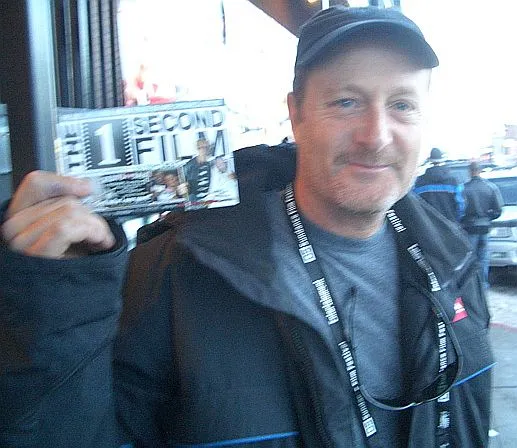
1978: Stacy Peralta arrives and the brand changes its name
Stacy Peralta had been one of the Dogtown Z-Boys and, by the mid 70s, one of the best skaters in the world. After that he rode for Gordon & Smith, a San Diego brand. At the end of 1978 he left G&S and partnered with Powell, whom he already knew from testing the slalom board. The company became Powell Peralta.
The split of roles was clear from the start. Powell designed and built: decks, wheels and, later on, bearings. Peralta ran the team, the ads and the image. And he had an idea that wasn’t common back then: instead of signing the best-known pros, he wanted to look for young kids and develop them.
The Bones Brigade: skateboarding’s most famous team
In 1979 Peralta put together the Bones Brigade. The first rider was Ray “Bones” Rodriguez, and his board, the one with the skull and sword, is still one of the most recognizable graphics of the brand. Over the following years Steve Caballero, Mike McGill, Tommy Guerrero, Alan Gelfand, Rodney Mullen and Tony Hawk joined, and Hawk was just a kid when he started. Lance Mountain, Per Welinder and many others came later.
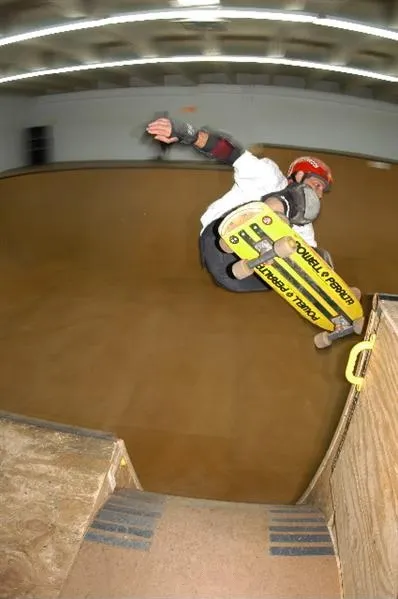
The team brought together very different styles, and that variety explains a good part of its influence:
| Skater | Discipline | What they brought |
|---|---|---|
| Ray Rodriguez | Pool and ramp | First team member (1979) |
| Alan Gelfand | Ramp | The ollie on ramp, which carries his nickname |
| Steve Caballero | Ramp and street | The caballerial and one of the longest careers in skateboarding |
| Mike McGill | Vert | The McTwist (1984) |
| Tony Hawk | Vert | Dozens of vert tricks and the first 900 in competition (1999) |
| Rodney Mullen | Freestyle, then street | The foundation of almost all technical street: the flatground ollie, the modern kickflip, the heelflip |
| Lance Mountain | Ramp and pool | The most personal style of the group and the humor in the videos |
| Tommy Guerrero | Street | One of the first to skate San Francisco streets on video |
| Per Welinder | Freestyle | Swedish freestyler with a pro model for the brand |
When people talk about “the” Bones Brigade, they usually mean six of them: Hawk, Mullen, Caballero, Mountain, McGill and Guerrero. Those are the six in the 2012 documentary and the six whose decks get reissued every year. If you’re curious about the tricks they invented, we have breakdowns of how to do the McTwist and the half cab, which comes from Caballero’s caballerial.

The Powell Peralta videos
Before YouTube existed, the way to watch your favorite skaters was a VHS tape. Powell Peralta was one of the first brands to get that. The Bones Brigade Video Show came out in 1984, cost about $15,000 and sold around 30,000 copies, a huge number for a skate video back then. After that they put out one almost every year, nearly all directed by Stacy Peralta.
| Year | Video | Why it’s remembered |
|---|---|---|
| 1984 | The Bones Brigade Video Show | The first one, and the one that proved videos sold decks |
| 1985 | Future Primitive | Tommy Guerrero skating the streets of San Francisco and the ramp in Lance Mountain’s backyard |
| 1987 | The Search for Animal Chin | The first with a plot: the team looks for a guy called Animal Chin |
| 1988 | Public Domain | More street, more young riders and the first appearance of many future pros |
| 1988 | Axe Rated | Short video of the team’s tour |
| 1989 | Ban This | The team at its best, with a lot of street |
| 1990 | Propaganda | The last big video of the classic Bones Brigade |
| 1991 | Eight and Celebrity Tropical Fish | The videos from the end of the Peralta era |
The main videos are posted in full on the brand’s official channel. Here’s the first one:
The Search for Animal Chin is the most loved of them all. The character the video is named after doesn’t skate and never shows up: it was a joke from Peralta aimed at brands that gave pro models to skaters who hadn’t earned them. The huge ramp they built for the ending, Chin’s ramp, still comes up in conversations among skaters of a certain age.
If you like old videos, there are plenty more in our rundown of the best skate videos of all time.
Craig Stecyk, VCJ and the Powell Peralta graphics
The look of Powell Peralta came mostly from two people: Craig Stecyk and Vernon Courtlandt Johnson, known to everyone as VCJ.
Craig Stecyk had already documented the Dogtown scene and took care of advertising: copy, photos and the idea behind each ad. His campaigns were strange for a skate brand at the time. For the “Avoid Obsolete Technologies” ad (1979) they burned a real car next to Powell’s parents’ house, with Ray Rodriguez standing in front. Since the gasoline kept burning out, they kept the fire going with contact cement. Afterward Powell, who knew how to weld, cut the car in half so Stecyk could use half of it in an exhibition. In another ad, from 1986, the brand published real bad reviews it had received. Peralta has explained that they could afford to do things like that because they had no shareholders and nobody telling them no.
VCJ is George Powell’s brother-in-law. He’s from Santa Barbara, taught himself to draw and joined the company helping set up the factory before moving into art. Heavy metal, M. C. Escher, Fritz Eichenberg and Robert Crumb influenced him, and it shows. A few stories behind his graphics:
- The skull and sword for Ray Rodriguez. To draw the skull, VCJ bought a life-size human skeleton he called “Rosie Bones”. He has kept it for more than forty years.
- The Ripper, the skull tearing through the paper. VCJ based it on the Metro-Goldwyn-Mayer lion: he wanted something that announced “we’re here”. Today it’s almost the unofficial logo of the brand and it has variants like the Winged Ripper.
- Caballero’s dragon. VCJ describes it as a soul consuming one life after another, and he thought of it as a symbol of the company’s strength.
- Future Primitive, Lance Mountain’s deck, is inspired by the cave paintings of Tassili n’Ajjer, in the Sahara. VCJ aged the images with wax transfer techniques.
VCJ spent about twenty years away from skateboarding and came back to draw for the brand in 2011. His graphics still show up on the reissues, and in 2025 he signed a collaboration with Metallica. If this topic interests you, we have an article on the most historic graphics in skateboarding.
1991: Peralta leaves and a hard decade begins
At the end of the 80s, Powell Peralta was one of the three big skate brands, along with Santa Cruz and Vision. But skateboarding changed very fast in the early 90s. Vert lost its audience, street took over everything and small skater-run brands appeared, like World Industries, selling cheaper decks with a different attitude.
Tony Hawk has told how he lived through it. In the best months of 1987 and 1988 he made about $20,000 in royalties from the sales of his deck, at around a dollar fifty each. By 1991 it was about $2,000 a month.
Stacy Peralta left the company in December 1991. George Powell says Peralta wrote him a letter saying he didn’t want his name on any product. The explanation usually given is that they didn’t agree on how to grow the company: Peralta wanted to split it into smaller brands, each with its own pros, and Powell thought it wouldn’t work. Peralta ended up moving into film and television. This is what happened to the team:
- Tony Hawk and Per Welinder founded Birdhouse in 1992. They each put in $40,000, and Hawk had to take out a second mortgage on his house.
- Tommy Guerrero and Jim Thiebaud, who had also skated for Powell, started Real with Deluxe in San Francisco.
- Lance Mountain founded The Firm.
- Steve Caballero stayed, and is still on the team more than forty years later.
The company went on as Powell Corporation (selling its decks as Powell) and made it through the decade putting out videos like Hot Batch, Chaos, Play or Strip Mall Heroes. George Powell decided to reinvest in making better decks and in the everyday skater rather than in the pros. The company itself boasts that in all these years it has never stopped manufacturing for a single day.
The reconciliation and the 2012 documentary
Powell and Peralta got back in touch and reconciled in 2006. From then on the brand started reissuing the original Bones Brigade decks, first under the name Powell Classic, and at the end of 2010 everything went back to being called Powell Peralta.
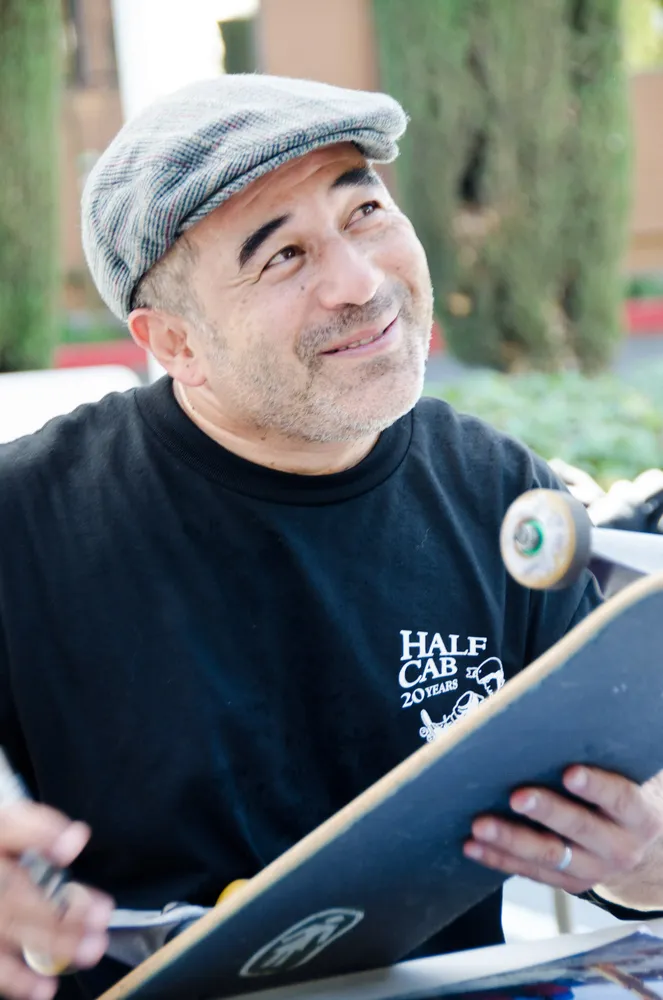
In 2002 the team members asked Peralta to make a film about them. At first he said no. Ten years later, in January 2012, he premiered Bones Brigade: An Autobiography at the Sundance festival, a documentary in which the six tell their own story. It’s the best way to understand what that team was, and you don’t need to know anything about skateboarding to enjoy it. In 2016 the brand received the Icon award from the Skateboarding Hall of Fame.
Who owns Powell Peralta today?
Powell Peralta belongs to Skate One Corp., a company based in Goleta, next to Santa Barbara, which is the continuation of George Powell’s original company. No outside group has bought it, and a lot of people think it belongs to Deluxe, the distributor of Real, Anti Hero and Spitfire, but that’s not the case.
Skate One also owns these brands:
- Bones Wheels (wheels) and Bones Bearings (bearings).
- Mini Logo, simple, affordable decks and wheels.
- Hoopla, Positiv and Golden Dragon, decks.
- Aera Trucks, trucks.
- RollerBones, roller skates.
Powell Peralta and Bones: are they the same brand?
No, although they’re from the same family. The first wheels George Powell made were already called Bones, even before Peralta showed up. Over time, Bones turned into two brands of its own: Bones Wheels, the STF and SPF wheels that half the world rides, and Bones Bearings, the Reds and Swiss bearings. All three belong to Skate One, but each has its own catalog and team. Powell Peralta also sells wheels under its own name, like the Dragon Formula you’ll see below.
The Bones Brigade is the Powell Peralta team, not the Bones one. Even though its first rider was nicknamed “Bones”, there’s no official explanation that the team name comes from that or from the wheels.
Where Powell Peralta decks are made
It depends on the line:
- Flight: made in the United States, at the company’s factory in Ventura, California.
- Reissues: made by partners in Mexico or at the Ventura plant itself.
- Regular 7-ply decks: North American hard maple pressed with AirLam presses. The lacquer is applied in China and some are built in Ventura.
In other words, not every Powell Peralta is made in the United States. If that matters to you, the line that definitely is made there is the Flight.
The decks: Flight, 7-ply and reissues
Flight
This is the brand’s flagship construction. It has maple plies with fiber reinforcement and is soaked in epoxy, so it’s thinner than a 7-ply deck and quite a bit tougher. The brand says it lasts more than twice as long as a 7-ply in its tail-snap tests and that the pop stays for its whole life, which is several times longer. In the US a Flight costs around $100, quite a bit more than a regular deck.
What you’ll notice when you step on it: it’s thinner and weighs a little less. Some skaters struggle to get used to the feel, and others never go back to all-wood decks. It makes sense if you snap decks often, especially at the tail, or if you skate a lot and would rather pay more once than buy three decks. If you’re just starting out, a regular deck does the job just as well.
7-ply
The classic maple deck, in popsicle shape (both ends kicked up). It’s the entry-level line and the one you’ll see in most shops.
Reissues
These are very faithful copies of the 80s decks: same shape, same graphics, same truck holes and the same concave, with a spoon nose. They look little like a modern deck: they’re wider, with a long tail, and built for pools, ramps or cruising. Plenty of people buy them to hang on the wall.
Shapes and concaves
Powell Peralta identifies each shape with a code. Here they are:
| Code | What it’s like | Wheelbase |
|---|---|---|
| K12 | Double kick, deep concave, flat angled nose and tail | Up to 14.5” |
| K15 | Like the K12, with even deeper concave and a spoon tail | Up to 15.75” |
| K16 | A K12 built for smaller skaters | 12.25” |
| K20 | Mild double kick, flatter concave and more feel for the board | Varies by size |
| K21 | A longer K20 | 15” to 15.5” |
| FK1 | Almost flat, with a bit of rocker and a kicked-up tail | 29” decks |
| SP3 | Spatula-shaped nose and tail, for decks around 10 x 30 inches | 17.25” |
If you’re torn between the K12 and the K20: the K12 locks your feet in more and suits anyone who does a lot of flip tricks. The K20 is flatter and comfortable for skating transition or getting around. To choose a size, check our guide to choosing a skateboard deck.
Powell Peralta wheels
Besides Bones, the brand sells wheels under its own name. These are the main formulas:
| Formula | Hardness | What for |
|---|---|---|
| Dragon Formula | 93A (also 88A to 97A) | Street and skatepark. The brand says they have 18 to 20% more rebound than a hard wheel, and that they grip and slide well |
| Park Formula | Hard | Skatepark and bowl |
| All Terrain | 80A on a hard core | Rough ground and skating around town |
| Soft Slide (Snakes, G-Slides) | 75A to 85A | Cruiser and longboard, for sliding |
| Race | 75A to 82A | Speed and downhill |
| Bombers | 85A | Bowl and ramp |
If you don’t know what hardness to pick, our skateboard wheels guide explains it step by step.
The Bones Brigade Series: the yearly reissues
Since 2012, Powell Peralta has put out a series of reissues every year with the decks of the six Bones Brigade riders: Hawk, Mullen, Caballero, Mountain, McGill and Guerrero. Each series has a shared graphic (in the 12th, for example, they were all silver), and in 2025 the collection was up to Series 17. They come out in limited runs, some sell out in a few days and over the years they resell for quite a bit more than they cost.
The original 80s decks are a different story: in good condition they go for thousands of dollars among collectors. If someone offers you a supposed original, compare it against photos of reissues before paying, because they look very similar.
The Powell Peralta team in 2026
The brand keeps several legends and a fairly international current team.
- Legends: Steve Caballero, Mike McGill, Kevin Harris, Salman Agah, Nicky Guerrero, Frankie Hill, Bucky Lasek and Mike Vallely.
- Street and park: Andy Anderson, Kelvin Hoefler, Spencer Semien, Ben Hatchell, Chris Hiett, John Bradford, Zach Doelling (pro since 2025), Kiko Francisco, Micaiah Furukawa, Dan Corrigan, Lucas Alves and Sakura Yosozumi, among others.
- Veterans: the Italian Giorgio Zattoni.
- Freestyle: the Spaniard Kilian Martin and Isamu Yamamoto.
- Bombers (speed): Kevin Reimer, Byron Essert and J. M. Duran.
Andy Anderson is probably the best-known face of the current team: he skates with a style all his own, somewhere between freestyle and park, and his deck is among the brand’s best sellers. In September 2025 he put out the “Crazy Wisdom” part.
Powell Peralta vs Santa Cruz and other brands
The most common comparison is with Santa Cruz. Both were born in California in the 70s, both have historic graphics they reissue and both have their own reinforced construction: Flight at Powell Peralta and VX at Santa Cruz. If you’re looking for a regular 7-ply deck, the day-to-day differences are small and what matters most is the shape and the graphic you like.
Compared to more modern brands like Baker, Powell Peralta has a much wider catalog of shapes, from the classic 80s ones to today’s popsicles, and more weight from its history. Baker focuses on street popsicle decks and its team.
If you want to see more deck brands compared against each other, we have a comparison of the best deck brands.
Powell Peralta fun facts
- For the “Tony Hawkface” ad they painted Tony Hawk’s face when he was about 16. The paint fumes made him dizzy and the session had to be cut to under an hour.
- George Powell and VCJ have been working together for about sixty years.
- Alan Gelfand, from the first Bones Brigade, is the “Ollie” who gave his name to the most basic trick in skateboarding. If you want to learn it, here’s how to ollie step by step.
- Several Bones Brigade members appear in the movie Gleaming the Cube (1989), starring Christian Slater.
- Animal Chin, the character the 1987 video is named after, never appears in it.
Who is a Powell Peralta for?
It depends on the line:
- A Flight: for people who skate a lot and snap decks, or who want the pop to last. It’s one of the toughest decks you can buy, in exchange for a higher price.
- A 7-ply: for any level. There’s nothing special about it compared to other good brands, apart from the graphics and the shape you choose.
- A reissue: for pools, ramps, cruising or hanging on the wall, if you like the Bones Brigade story.
What Powell Peralta has that other brands don’t is that history: many of the skaters who invented modern skateboarding came through it. If you want to get to know them better, almost all of them are on our list of the greatest skateboarders of all time.
Frequently asked questions
Who owns Powell Peralta?
Skate One Corp., a company in Goleta, California, that is the continuation of the company George Powell started in 1976. It has never been sold to an outside group and it doesn't belong to Deluxe. Skate One also owns Bones Wheels, Bones Bearings and Mini Logo.
Are Powell Peralta and Bones the same brand?
No. They are sister brands under the same owner, Skate One. Powell Peralta makes decks, its own wheels and apparel; Bones Wheels makes wheels (STF, SPF) and Bones Bearings makes bearings (Reds, Swiss). The Bones Brigade was the Powell Peralta team.
Where are Powell Peralta decks made?
Flight decks are made in the United States, at the company's factory in Ventura, California. Reissues are made by partners in Mexico or at the Ventura plant. Regular 7-ply decks are North American maple, finished with lacquer in China, and some are built in Ventura.
What is a Powell Peralta Flight deck?
A maple-ply deck with fiber reinforcement soaked in epoxy. It is thinner than a 7-ply deck and a lot tougher: the brand says it lasts more than twice as long in tail-snap tests and keeps its pop. It costs quite a bit more than a regular deck.
Is a Flight deck worth it compared to a regular deck?
If you snap decks often or skate a lot of hours, yes, because it lasts several times longer. If a regular deck lasts you months or you are just starting out, the price isn't worth it.
Who were the members of the Bones Brigade?
The six best known are Tony Hawk, Rodney Mullen, Steve Caballero, Lance Mountain, Mike McGill and Tommy Guerrero. Many more rode for the team, like Ray Rodriguez (the first, in 1979), Alan Gelfand, Per Welinder, Mike Vallely, Frankie Hill or Bucky Lasek.
Why did Powell and Peralta split up?
Stacy Peralta left in December 1991. George Powell says Peralta wrote him saying he didn't want his name on any product. The usual explanation is that they disagreed on how to grow the company. They reconciled in 2006.
Is Powell Peralta still around?
Yes. It still makes decks, wheels and apparel, reissues the Bones Brigade decks every year and has a current team, with pros like Andy Anderson, Kelvin Hoefler or Spencer Semien and legends like Steve Caballero.
What is the Powell Peralta Ripper?
It's the skull tearing through the paper, one of the brand's most famous graphics. It was drawn by VCJ, Powell Peralta's artist, who based it on the Metro-Goldwyn-Mayer lion.
What is the difference between the K12 and K20 shapes?
The K12 is a double kick with deep concave and angled nose and tail: it locks your feet in more and works well for flip tricks. The K20 has milder concave and more feel for the board, comfortable for transition and skating in general.