DC Shoes is one of the shoe brands that weighed the most in 90s and 2000s skateboarding. It started in California in 1994 as a brand built for pros, with Danny Way as its first pro, and it became famous for its big shoes, for The DC Video and for the Mega Ramp. Today it belongs to Authentic Brands Group, and the 2025 bankruptcy of one of its licensees has left a lot of people wondering whether it’s still alive.
Here you have DC’s history, what the name means, who owns it now, what happened with the stores, the most important models and videos, and the current team.
How DC Shoes started
The story begins before the shoes. In 1989, Ken Block, who was 22 at the time and a snowboarder, started screen printing t-shirts. His parents lent him 10,000 dollars and he set up the business in a small warehouse. That brand was called Eightball, and he later had to drop it because another company already used the name.
Block met Damon Way, a skater, in an algebra class at college. Damon helped get the brand into skate shops, and his younger brother, Danny Way, was one of the first pros to wear the clothes. Eightball turned into Droors Clothing, which also released jeans in 1992, and in 1993 the company moved to a bigger space in Carlsbad, California.
In 1994 came the move into shoes. The story goes that Damon convinced his brother Danny and Colin McKay to leave their shoe sponsors and put their names on DC’s first two models. Danny Way was the brand’s first skate pro. The first shoes were made by other skate brands, and later the company moved to a factory in Korea.
What does DC stand for?
The most repeated answer is that DC stands for Droors Clothing, the name of the clothing brand it came out of. Over time the Droors clothing line was sold and the name stayed as plain DC Shoes. There’s another version saying it was the initials of Danny and Colin, the first two pros. That explanation does circulate, but Droors Clothing is the more common one.
From the garage to big numbers
DC grew fast. In 1995 it had sales of about 7 million dollars and around 35 employees. A year later it was 21 million and 50 employees, with eight pros on the skate team. In 1997 the team went on a world tour, motocross and surf teams were created, and Droors and Dub, the snowboard clothing line, were sold. That year, Danny Way jumped ten feet off a helicopter onto a ramp with the DC logo, which made it into lots of media outlets.
In 1998 the company, which had been called Circus Distribution, officially became DC Shoes, Inc. In 2000 it had sales of about 60 million and in 2001 it made two million pairs. DC bet on selling in mall chains too, but kept some models for skate shops only, which annoyed some people and helped others.
There was also internal drama. In 2002 Australia’s Billabong offered to buy DC and the deal fell through. Shortly after, the chief financial officer, Clayton Blehm, was fired, they sued each other and the lawsuits dragged on for years.
In September 2003, Danny Way and Colin McKay were given equity in the company.
The DC Video (2003) and the Mega Ramp
In July 2003 The DC Video came out, after about three years of production. It was directed by Greg Hunt. It’s probably the brand’s most remembered video. These are its parts:
| Skater | What he does in the video |
|---|---|
| Anthony Van Engelen | Opens the video, with a montage of barriers and a switch tre flip |
| Josh Kalis | A part with lots of lines at LOVE Park |
| Rob Dyrdek and Big Black | A sketch with his bodyguard Big Black |
| Brian Wenning, Ryan Gallant and Colin McKay | The middle of the video |
| Stevie Williams | A very street part |
| Danny Way | The closer, on the Mega Ramp, with Orion by Metallica |
Danny Way’s part is the most famous. The Mega Ramp is a giant ramp: a long roll-in, a gap several meters wide and a quarter pipe on the other side. Danny had designed it and it debuted at the Point X camp, in the desert, during a 2002 event. In The DC Video it got christened with that name. In a single session, Way broke two records: the longest jump, at 75 feet (about 23 meters), and the highest, at 23.5 feet (about 7.2 meters). In 2005 he jumped the Great Wall of China with one of these ramps.
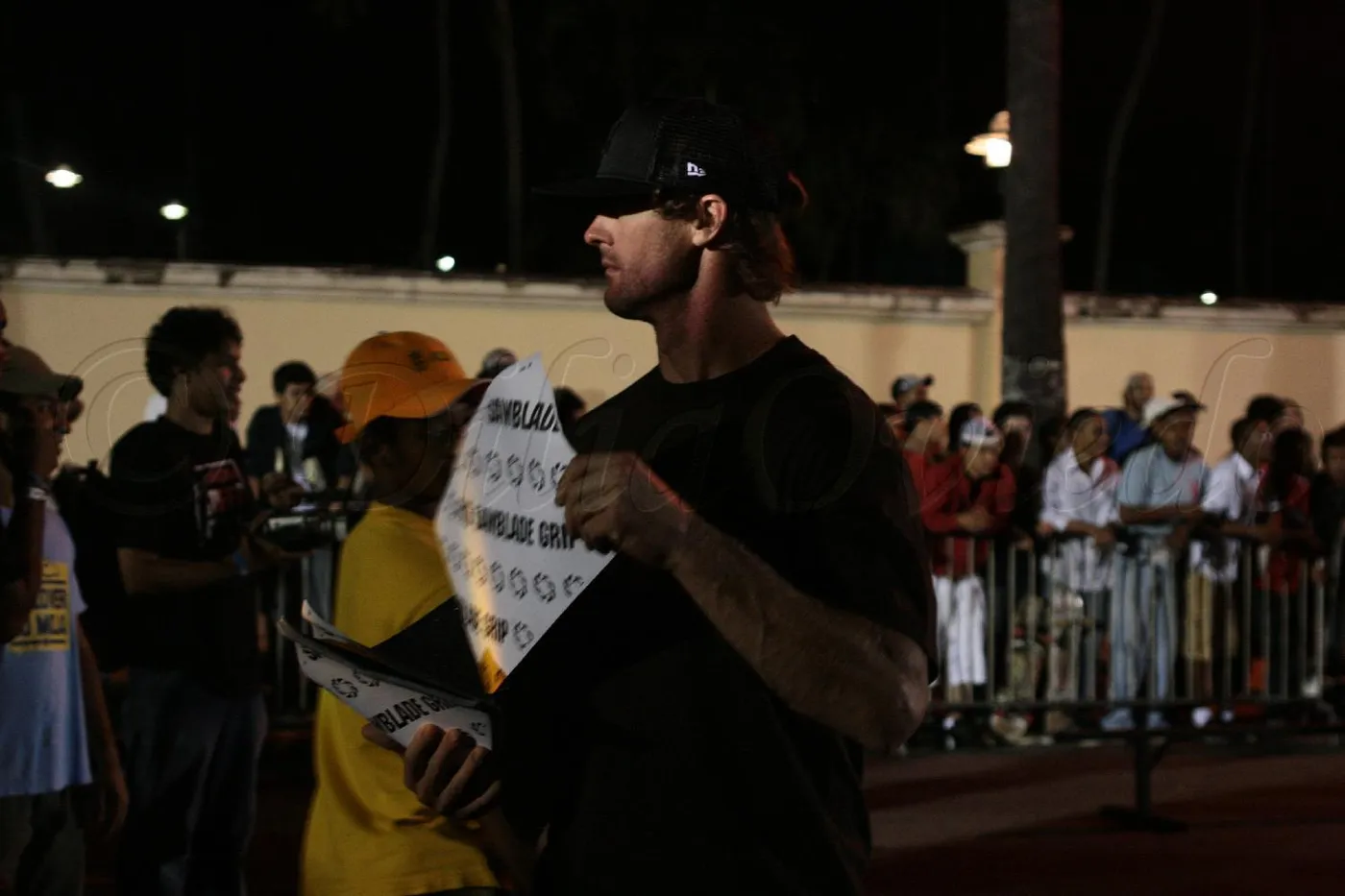
Rob Dyrdek’s sketch with his bodyguard Christopher “Big Black” Boykin later turned into MTV’s Rob & Big, which aired from 2006 to 2008. A follow-up to the sketch was also filmed for one of the DVD editions.
If you want the other half of Danny Way and Colin McKay’s story, check our Plan B page, the brand they relaunched together in 2005.
Quiksilver, ABG and who owns it now
On March 8, 2004, Quiksilver bought DC for 87 million dollars. In 2010 the headquarters moved to Huntington Beach, where Quiksilver is based. Ken Block ended up leaving the brand and focused on his own company and his car gymkhana videos. He died on January 2, 2023, in a snowmobile accident in Utah, at 55.
Quiksilver was renamed Boardriders, and on September 1, 2023 Authentic Brands Group (ABG) bought it, a company that owns brands and licenses them to other companies. DC, Quiksilver, Billabong, Roxy, RVCA, Element and others came with it.
The same month, ABG gave Liberated Brands the license for several action brands in the United States and Canada. Liberated closed its headquarters in December 2024 and filed for bankruptcy (Chapter 11) on February 2, 2025, with about 400 stores worldwide, 124 of them in the United States. The DC stores there were closed. In May 2025, another company, BR South Pacific, took over the direct license for DC and other brands in Australia, New Zealand, Thailand and Indonesia.
Here’s what matters: DC hasn’t disappeared. What went under was a company that held a license, not the brand. The brand still belongs to ABG and still puts out products and keeps a team. Who holds the license in Europe changes at ABG’s discretion, so the safest bet is to check the official store for your country.
The best-known DC shoes
DC is famous for its chunky shoes from the 90s and early 2000s, with a thick tongue and a big sole. These are the best-known models:
| Model | What it is |
|---|---|
| Williams OG | Stevie Williams’ first shoe at DC (2000). Very chunky and basketball-influenced. Reissued in 2019 with DGK |
| Lynx | Archive model. Reissued in 2017, the first time in about 20 years, and again in 2021 in a Sabotage edition |
| Centric S | Josh Kalis’ shoe, from 2012 |
| Court Graffik | Another one of DC’s well-known models |
| E. Tribeka | A lighter shoe. John Shanahan has his own version |
| Legacy OG | Collaboration with the Canadian brand Dime (2017) |
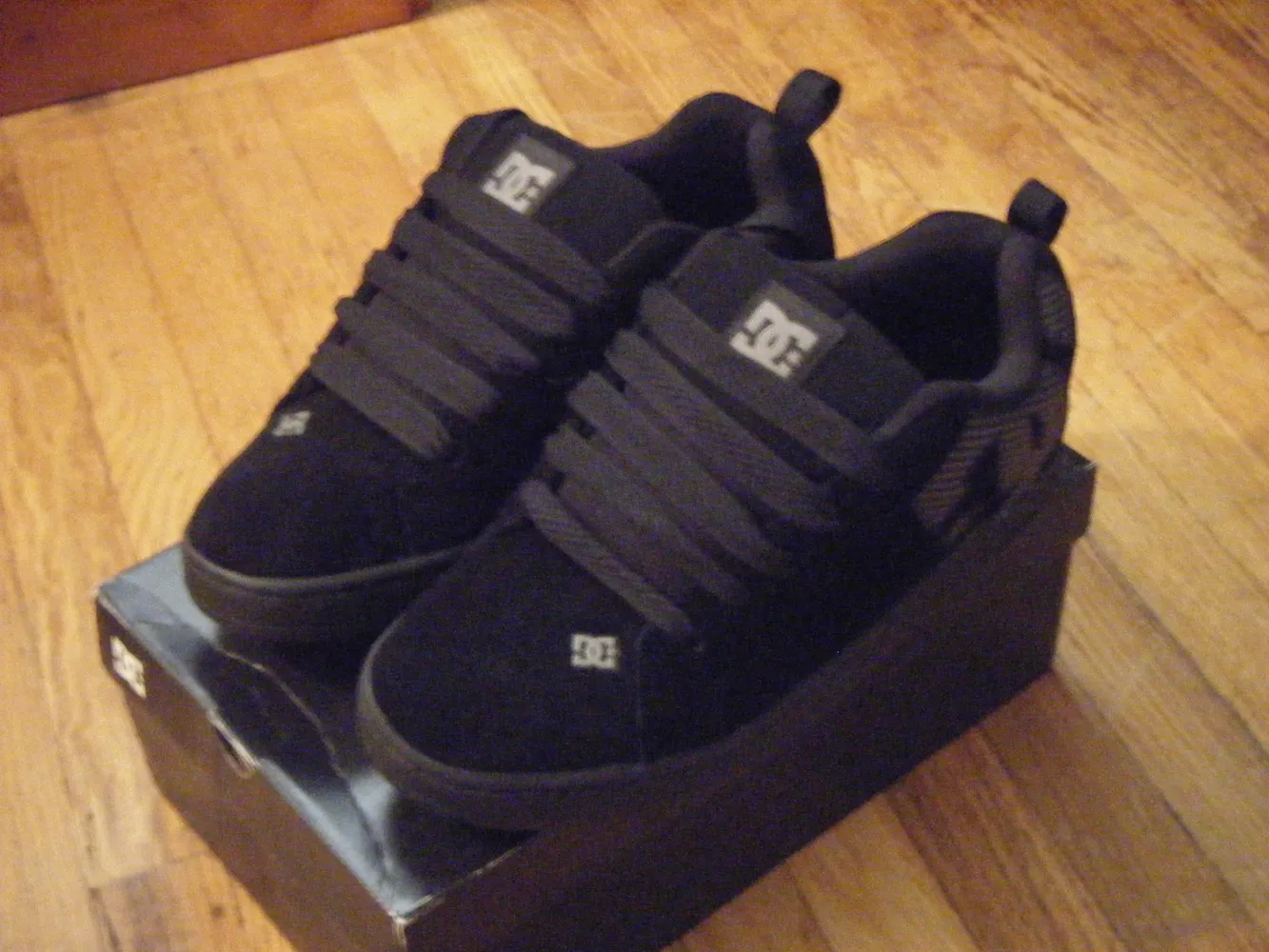
In recent years DC has bet on reissuing its classics and on collaborations: Dime, ROKIT (with a version of the Williams OG), DGK, Sabotage (Philadelphia) or creative director Lucien Clarke, who in July 2023 presented the DCV’87 collection with classic skate shoe shapes.
Rob Dyrdek, Josh Kalis and DC’s pros
Rob Dyrdek started with DC around 1995, when he got his first shoe, and the relationship lasted about twenty years and 29 models. His departure was announced in early 2016. He was also one of the drivers behind the Kettering (Ohio) skate plaza, funded by the foundation he created with DC.
Josh Kalis, from Philadelphia, is another name tied to DC. He filmed much of his part in The DC Video at LOVE Park. In 2021, DC and the Sabotage collective released No Love Lost, a short documentary about the LOVE Park scene, and a limited-edition Lynx designed with Kalis and Stevie Williams in mind.
Stevie Williams, also from Philadelphia, joined DC around 2000, got his first model and years later started DGK, his own skate brand.
Other important skaters from the different eras: Anthony Van Engelen, Brian Wenning, Wes Kremer, Chris Cole, Evan Smith and Tristan Funkhouser (T-Funk).
DC in the 2010s: the relaunch
In 2011 DC changed its image: a new flag-shaped logo and the Rediscovery campaign, with Mike Mo Capaldi and Nyjah Huston as signings. Nyjah got his own shoe, presented in 2013. Evan Smith also arrived, and later had his own video, The Evan Smith Experience (2013).
In 2016, Damon Way returned to the brand after about eight years away, aiming to recover the original spirit. That’s where the reissues and collaborations you saw above came from.
The current team
DC’s skate team is international. The global team includes John Shanahan, Josh Kalis, Shintaro Hongo, Will Marshall, Jahmir Brown and Kevin Bilyeu, and the brand also has its own team in Japan with several street and park skaters, like Taisei Hamamura or Kensuke Sasaoka. Other names from recent years are Tiago Lemos (Brazil) and Jaakko Ojanen (Finland).
DC compared to other brands
- Versus Vans: Vans is much older (1966) and is still the go-to brand for vulcanized soles and thin board feel. DC came up in the 90s with more of a pro, chunky-shoe approach, although today it also makes lighter models.
- Versus Nike SB: Nike SB has a huge company behind it, with far more resources and limited editions. DC competes with archive editions and collaborations with small brands.
- Versus sister brands: DC belongs to the same group as Element, although each brand has its own team and identity.
If you’re not sure which shoe to pick when starting out, we have our guide to the best skate shoes and the one on building a complete skateboard.
Who is DC for?
For anyone who likes the aesthetic of 90s and 2000s skating, and for anyone who wants a shoe with history. The archive editions are more of a collector’s piece than a shoe for skating every day. If you skate a lot of plazas or ledges, try the current models and compare them with other brands before deciding.