
Vans wasn’t born for skateboarding. It started because two Californian brothers, Paul and Jim Van Doren, wanted to sell cheap, durable shoes. That half a century later it is THE skate shoe is one of the luckiest accidents in the history of urban culture. Here is the story, told straight, without the marketing.
1966: the day it all started
16 March 1966, Anaheim, California. The brothers Paul Van Doren (who had worked at Randy’s Shoes) and Jim Van Doren, together with partners Gordon Lee and Serge D’Elia, open a store called “The Van Doren Rubber Company” at 704 East Broadway.
The idea was different: instead of selling finished shoes, they made them in the back and sold them directly to customers at the counter. You came in the morning, chose colour and size, and came back in the afternoon for your finished shoes.
On the first day they sold 12 pairs. Paul himself handed over the first ones and agreed to be paid the next day (the customers had come without money because they didn’t expect to take the shoes home).
The first Vans, called the Vans #44, sold for $2.49 a pair. The sole was vulcanized rubber with a “waffle” pattern (a grid of little squares). Without knowing it, that would be decisive years later.
1970-75: the accident that changed everything
In the early 70s, surf-skate was starting to take off in California. The Dogtown Z-Boys (Tony Alva, Stacy Peralta, Jay Adams) were looking for skate shoes. The options on the market were poor: either too stiff (Converse) or too smooth (ordinary sneakers).
They tried the Vans Authentic. The waffle sole gripped the board’s grip tape like no other. The low weight, the flexibility and the price (half that of Converse) were ideal.
In 1974-75, the Z-Boys started appearing in skate magazines wearing Vans. The brand went from “local Californian shoe” to “the obvious choice for skaters” in less than 2 years, without Vans having done anything on purpose.
1977: the first signature shoe in skateboarding history
Stacy Peralta and Tony Alva contacted Vans. They wanted a shoe made specifically for skateboarding. Vans agreed, and the Vans Era (model #95) was born, with:
- Extra padding around the collar to protect the ankle during tricks.
- A choice of colours.
- Reinforced construction in the wear zones.
It was the first signature shoe in skateboarding. It was yellow and blue, Tony Alva’s colours.
1977-80: growth and new shapes
Between 1977 and 1980 Vans releases:
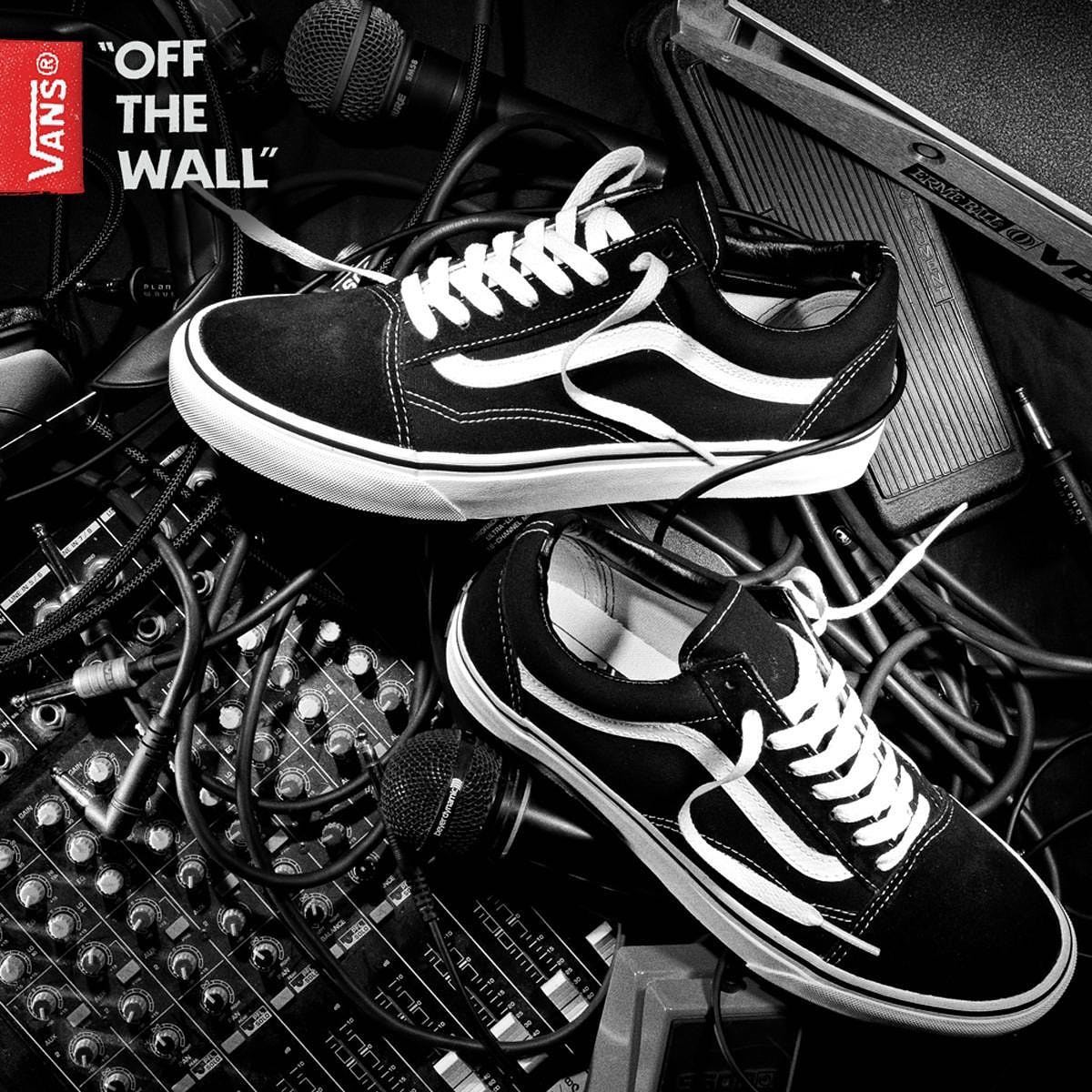
- Vans Old Skool (#36) in 1977: the first shoe with the iconic side stripe (the jazz stripe). Originally designed by Paul Van Doren while doodling on a napkin.
- Vans Sk8-Hi (#38) in 1978: a high-top version of the Old Skool, with high padding for ankle protection.
- Vans Slip-On (#98) in 1979: no laces, easy to put on. It became iconic in 1982 when Sean Penn wore a pair in “Fast Times at Ridgemont High”.
By 1980, Vans had 70 stores in Southern California and sold to independent shops in other states.
1984: bankruptcy
This is where the story almost ended. Vans had grown too fast and diversified into sports (skateboarding, BMX, breakdancing, surfing, motocross) without being able to pay off its debt.
1984: Vans files for Chapter 11 (bankruptcy protection in the USA). It nearly closes.
Paul Van Doren takes personal charge of the company, working 6 days a week without a salary for 3 years to pay the creditors. In 1987 he gets it out of bankruptcy completely.
1989-1995: the Steve Caballero and Bones Brigade years
Vans starts releasing shoes signed by individual skaters:
- Steve Caballero, Half Cab (1992): many skaters cut the high-top Caballero down to mid height, and in 1992 Vans turned that cut into an official model. It is still one of the brand’s best sellers.
- Tony Hawk and the Bones Brigade wore Vans in the most visible skate years of the 80s.
In 1995, Steve Van Doren (Paul’s son) takes over management and steers the brand towards pure skateboarding.
1996: the first Warped Tour
Vans sponsors the first Warped Tour, a music and action sports festival that for 25 years (1996-2019) was the biggest skate-punk culture event in the USA.
This establishes Vans as the brand of the whole skate-punk culture, not just a shoe company.
2004: VF Corporation buys Vans
VF Corporation (the clothing giant that owns The North Face, Timberland, Dickies and Eastpak) buys Vans for 396 million dollars. Vans is no longer independent.
The skate community feared VF would “commercialise” the brand and it would lose authenticity. What happened: VF kept creative direction of Vans Skate (the skate-specific division) and the brand continues with one of the strongest skate teams in the world.
2010-2020: complete dominance and the PRO era
In 2014, Vans launches the Pro Skate line: technical versions of the classic models with DURACAP technology (reinforcement in impact zones) and UltraCush HD (an insole with more shock absorption).
Models like the Pro Old Skool, the AVE Pro (signed by Anthony Van Engelen) and the Crockett Pro (Gilbert Crockett) are the best-selling PRO shoes in the skate industry.
The Vans Skate team today includes Anthony Van Engelen, Tony Trujillo, Geoff Rowley, Tyson Peterson, Daniel Lutheran, Justin Henry, Rowan Zorilla, Beatrice Domond, Lizzie Armanto and many more. It is probably the strongest roster of any skate brand.
The Vans paradox
Vans is at the same time the most authentic skate shoe and the most mainstream shoe in the world. Forgotten pros wear them, and so do teenagers who have never seen a skateboard.
For decades this duality has been Vans’ internal “problem”: how to stay a skate brand when 90% of your customers are mainstream. The answer has been to keep the Skate division purely technical and approved by real skaters, while the lifestyle division does what it has to do commercially.
What skaters wear today
| Model | What it is for |
|---|---|
| Authentic Pro | Minimalist setup, close-to-the-foot feel. |
| Old Skool Pro | The universal classic. Works for everything. |
| Sk8-Hi Pro | For skaters who want ankle protection. |
| Half Cab Pro | A good balance of height and weight. |
| AVE Pro | Cup sole with maximum impact protection. |
| Crockett Pro | Vulcanized with DURACAP for heavy use. |
| Skate Slip-On | No laces, retro look. |
Where to go next
- The greatest skateboarders of all time: the ones who have worn Vans for 50 years.
- The greatest skateboarding tricks ever: a visual history of skateboarding.
- Spanish skate brands: the local contrast.
- How to choose your first deck: to complete the setup.
Conversation
Your name will be public. Your email stays private. Comments are reviewed before publishing.