

In December 1986, an Atari Games arcade machine let loose a swarm of killer bees if you took too long to finish the run. It was called 720° and it was the first skateboarding video game. Thirteen years later came Tony Hawk’s Pro Skater, and for a lot of people who skate today it was the first time they heard words like kickflip, grind or manual.
Between that machine and skate., the free game EA put into early access in 2025, there are forty years of history: a prototype starring Bruce Willis turned into a skater, a 120-dollar plastic board nobody bought, a control system that changed the genre and a handful of indies that proved you don’t need a big budget to capture what skating feels like. At the end of the article you have all 42 games as cards, with trailers and screenshots.
Forty years in one table
| Year | Game | What it brought |
|---|---|---|
| 1986 | 720° (Atari Games) | The first skateboarding game |
| 1987 | Skate or Die!, California Games, Skate Boardin’ | Skateboarding reaches 8-bit computers and consoles |
| 1997 | Top Skater (Sega) | An arcade machine where you stood on a board |
| 1998 | Street Sk8er | The first 3D skateboarding game on PlayStation |
| 1999 | Tony Hawk’s Pro Skater | The game that defines the genre |
| 2000 | Tony Hawk’s Pro Skater 2 | The manual and the park editor |
| 2001 | Tony Hawk’s Pro Skater 3 | The revert and online play |
| 2003 | Tony Hawk’s Underground | Getting off the board and walking |
| 2007 | skate | The flick-it is born |
| 2009 | Tony Hawk: Ride | The peripheral that sank the series |
| 2010 | skate 3 | The game YouTube won’t let die |
| 2014 | OlliOlli | 2D skateboarding becomes fashionable again |
| 2015 | Tony Hawk’s Pro Skater 5 | The low point of the series |
| 2018-2019 | Skater XL, Session | Simulators with one stick per foot |
| 2020 | Tony Hawk’s Pro Skater 1 + 2 | The remake that worked |
| 2025 | THPS 3+4, skate., Skate Story | A second remake, free skate and the indie of the year |
The 80s: 720°, Skate or Die! and California Games
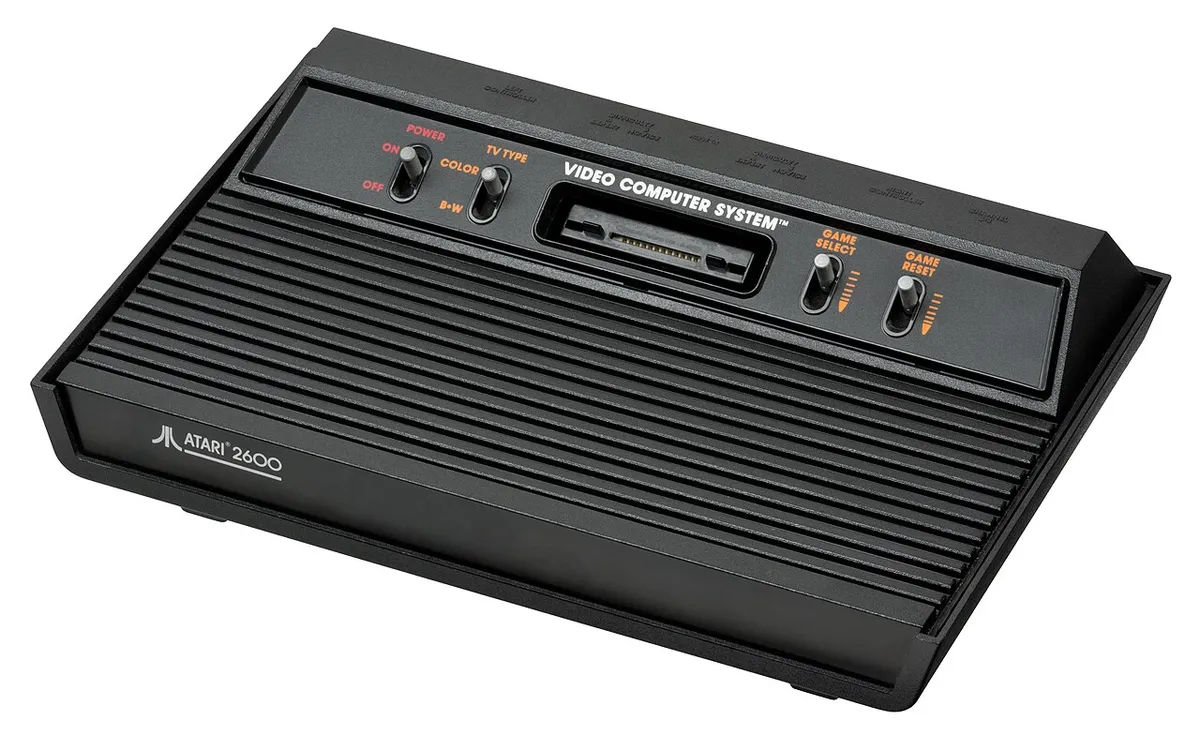
720° hit the arcades in December 1986. It had its own rotating controller and four parks with four events each: ramp, downhill, slalom and jump. The name comes from the 720, two full spins in the air. And it had a rule nobody forgets: if you dawdled, the words “Skate or die!” appeared and a swarm of bees chased you until the run was over. To understand the movement, the Atari team built a real half-pipe behind the building.
The machine was a hit and came home in the late 80s, with versions for the NES, Commodore 64, ZX Spectrum and Amstrad CPC. In Europe it was distributed by U.S. Gold, and some editions came with a cassette of the soundtrack. The NES version came off worst because of its controls. Today you can play the original inside LEGO Dimensions.
That same year, 1986, also saw Skate Rock for the Commodore 64, a sort of Paperboy on a skateboard that almost nobody remembers.
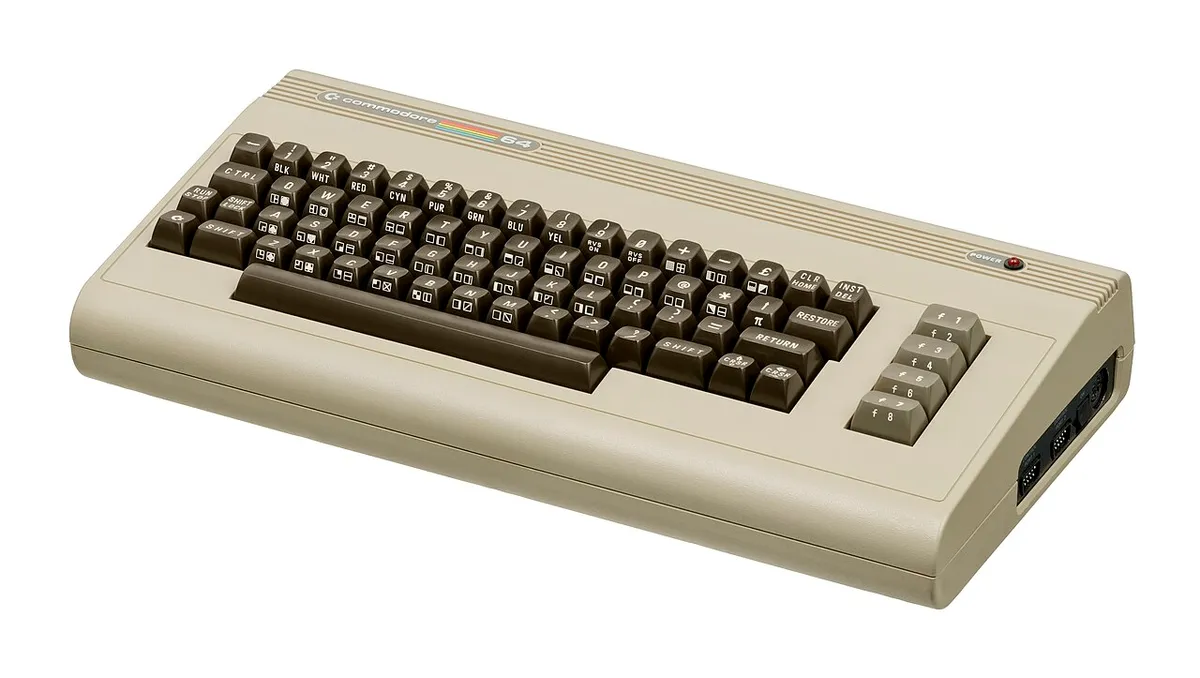
1987 brought the two games that plenty of 80s skaters had on their Commodore 64:
- California Games (Epyx, June 1987) wasn’t only about skating: it mixed a half-pipe with surfing, BMX, roller skating, footbag and frisbee. It sold more than 300,000 copies in nine months and ended up bundled with the Atari Lynx handheld.
- Skate or Die! (EA, October 1987) was the first game Electronic Arts developed in-house. It was inspired by 720°, and what people remember most is Rob Hubbard’s music. Konami’s NES version sold 1.2 million copies. There was a sequel in 1990 and a PS2 and Xbox remake that was cancelled in 2003.
The same year also brought Skate Boardin’ for the Atari 2600, with 30 hidden tricks you could uncover in a few minutes. In the UK, Codemasters published Pro Skateboard Simulator (1988) for Amstrad and Spectrum, one of many budget games of the time.
The 90s: the gap before Tony Hawk
For almost ten years skateboarding barely had any video games. Things like ESPN Extreme Games (1995) came out, mixing several sports, but nothing focused on skating until the end of the decade.
The first sign was Top Skater (Sega, 1997), an arcade machine where you stood on a plastic board to control the character. The soundtrack was by Pennywise, and its director, Kenji Kanno, went on to make Crazy Taxi. A year later came Street Sk8er for PlayStation, released in Japan in October 1998 and in the rest of the world in early 1999, months before Tony Hawk. The reviews were lukewarm, but it showed there was an audience for a 3D skateboarding game.
Tony Hawk’s Pro Skater: the game that started out as a Bruce Willis game
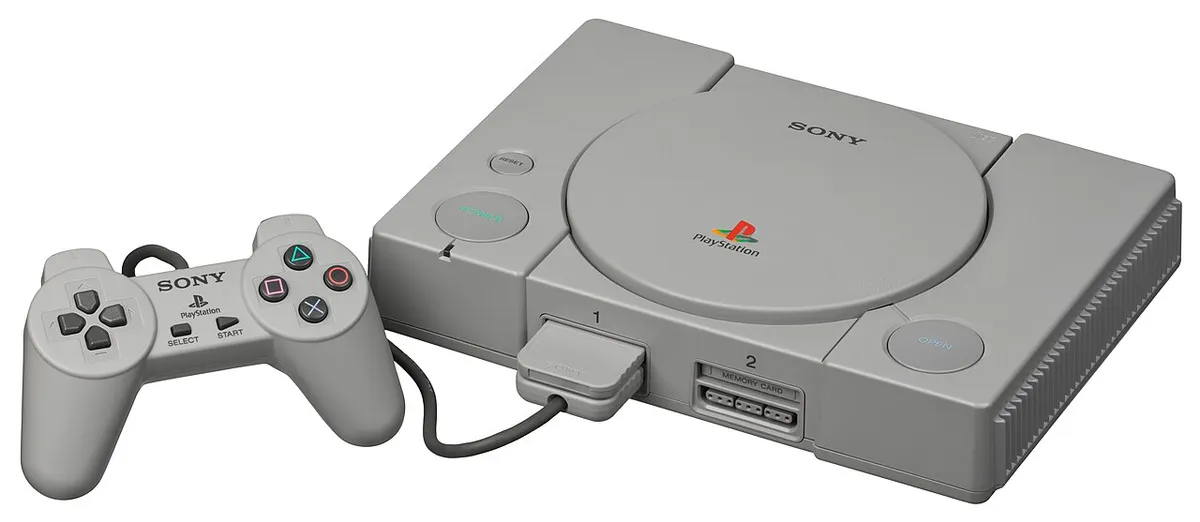
In 1998 Neversoft was a small, struggling studio in Los Angeles. Sony had cancelled one of its games and it was finishing Apocalypse, a shooter starring Bruce Willis for Activision. Activision was looking for a skateboarding game, and the team tried swapping Willis’s character for a skater inside the Apocalypse engine. As a joke they called it “John McClane’s Pro Skater”. That prototype became Tony Hawk’s Pro Skater.
They built it in about nine months. Mick West was lead programmer and Scott Pease handled design. Almost nobody at the studio skated when they started, so the president, Joel Jewett, encouraged the team to get on a board. To get more dev kits, they converted ordinary PlayStations with GameShark cartridges.
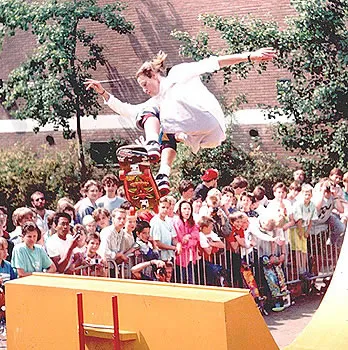
Activision contacted Tony Hawk in September 1998. Pease remembers Hawk sitting through a 40-slide presentation looking bored, and only perking up when he picked up the controller and tried the demo. They offered him 500,000 dollars for the use of his name and he chose a percentage of every copy sold instead. Hawk has often called it the best financial decision of his life. He also picked the pros in the game: Elissa Steamer, Kareem Campbell, Bob Burnquist, Andrew Reynolds, Chad Muska, Eric Koston, Geoff Rowley and a few more.
Plenty of the game’s details came from elsewhere. The video tapes you had to find in every level were inspired by the stars in Super Mario 64. And the 900, the two and a half spins that Hawk landed for the first time at the X Games in June 1999, wasn’t planned: they rushed it into the game after seeing it, about two months before release.
The game reached North American shops on 29 September 1999 and Europe on 18 October. Each run lasted two minutes: you had to chain combos, collect the S-K-A-T-E letters and find the hidden tape. Activision hoped to sell 250,000 copies to recoup its investment. It sold around 800,000 that year and more than five million in total. Before release it was already doing the rounds among skaters thanks to a demo on a PlayStation magazine disc, and the team took it to competitions with a big TV so people could try it.
In 2020 the documentary Pretending I’m a Superman: The Tony Hawk Video Game Story came out, telling all this through the developers and the skaters in the game.
The soundtrack
Ask anyone about Tony Hawk’s Pro Skater and they’ll probably hum Goldfinger’s “Superman” before telling you a single trick. With very little music budget, Neversoft signed punk and hip-hop bands that in many cases the skaters themselves were listening to, and that mix became the series’ trademark.
A few stories behind those songs:
- Goldfinger, “Superman”: singer John Feldmann found out his song was in the game when people started shouting it back at gigs on a tour of England. In 2023, Hawk jumped on stage to sing it with them at a show in Anaheim.
- Primus: their guitarist, Larry LaLonde, skates, and the band handed over the music without any fuss.
- Naughty by Nature: “Pin the Tail on the Donkey”, from 1991, became famous a decade later thanks to THPS2.
- Slayer said no at first and ended up in through their manager.
- Across the series you could hear Dead Kennedys, Suicidal Tendencies, Bad Religion, The Vandals, Lagwagon, Iron Maiden and even Johnny Cash.
Neversoft’s golden age: THPS2 to Proving Ground
Neversoft put out almost a game a year between 1999 and 2007. Each one added a new mechanic, and the critics’ scores slipped little by little as the formula repeated.
| Game | Year | What it added | Critics’ average |
|---|---|---|---|
| Tony Hawk’s Pro Skater | 1999 | Two-minute runs, SKATE letters, tapes | 92 |
| Tony Hawk’s Pro Skater 2 | 2000 | The manual, park and skater editors | 98 |
| Tony Hawk’s Pro Skater 3 | 2001 | The revert and online play on PS2 | 97 |
| Tony Hawk’s Pro Skater 4 | 2002 | No time limit, the spine transfer | 94 |
| Tony Hawk’s Underground | 2003 | Getting off the board and walking, story mode | 90 |
| Tony Hawk’s Underground 2 | 2004 | Focus mode, Bam Margera and the Natas Spin | 85 |
| Tony Hawk’s American Wasteland | 2005 | One continuous map, no loading screens | 77 |
| Tony Hawk’s Project 8 | 2006 | Nail the Trick: the stick acts as a foot | 81 |
| Tony Hawk’s Proving Ground | 2007 | Neversoft’s last | 79 |
THPS2 is the one a lot of people call the best in the series. The manual let you join ramp tricks to ground tricks and make almost endless combos, and the park editor gave hours and hours of play. It sold 5.3 million copies up to 2007. THPS3 was one of the first PS2 games with online play and the first in the series with advertising inside the levels. THPS4 dropped the two-minute limit.
With Underground (2003) the series turned into something else: there was a story mode, you could get off the board, climb into cars and explore huge levels. Its soundtrack won an MTV award and the PS2 version alone sold 2.11 million copies in the US. American Wasteland (2005) tried to join every level into a single Los Angeles map, with corridors that hid the loading. From there, sales fell.
In 2007, after Proving Ground, Neversoft left the series and moved on to Guitar Hero. In 2014 the studio was folded into Infinity Ward to work on Call of Duty. At the farewell, the staff burned the company logo, an impaled eye.
Ride, Shred and Pro Skater 5: the bad years
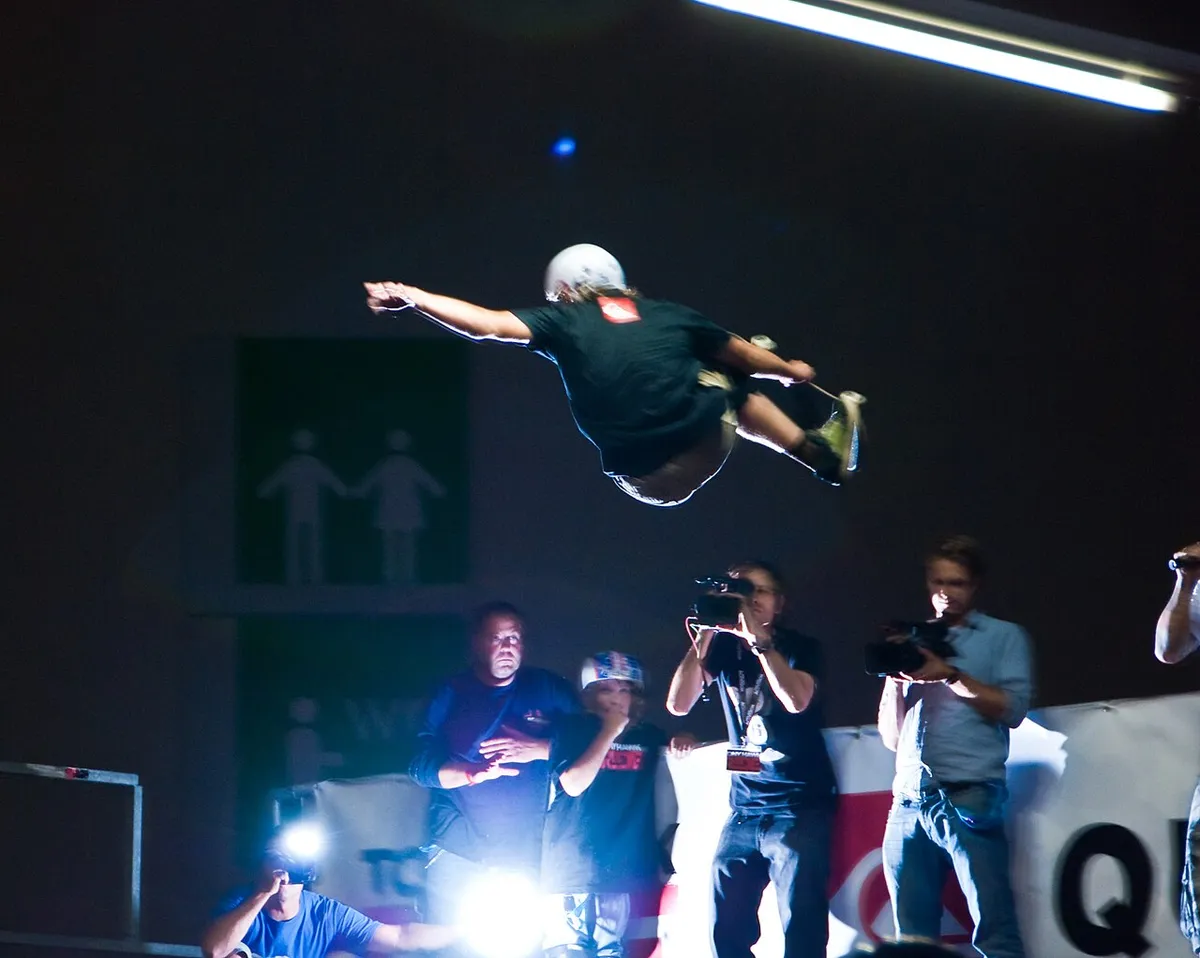
With Neversoft gone, Activision gave the series to Robomodo, a new studio in Chicago, and bet on something different. Tony Hawk: Ride (November 2009) was played standing on a wheel-less plastic board with sensors that detected which way you leaned. These were the years of Guitar Hero and the Wii, and on paper the idea made sense. In practice the board responded badly, the game cost around 120 dollars and critics panned it (44 to 47 out of 100). In its first month it sold fewer than 114,000 units in the US. Hawk has said the game came out before it was finished because the date was already set.
A year later came Tony Hawk: Shred (2010), with the same board, and it sold even less. Players were already tired of filling the living room with plastic peripherals. Activision shelved the series and only released Pro Skater HD in 2012, a downloadable game with levels from the first two, which was pulled from digital stores in 2017.
The final blow was Tony Hawk’s Pro Skater 5 (September 2015), also from Robomodo. It came out with bugs of every kind, graphics from another generation and a patch of several gigabytes on launch day. Its critics’ average was 32 out of 100 on PS4, the worst in the series, and for a few years it looked like there would be no more Tony Hawk.
EA skate and the flick-it: the game that changed the controls
While Tony Hawk repeated itself, EA Black Box, a studio in Vancouver, unveiled skate in 2007 with a very different idea. Tricks were no longer done by pressing buttons: the right stick was your back foot, and you had to move it the way you move your foot in a real trick. Pulling the stick down and then up made an ollie; if you flicked it diagonally on the way up, you got a kickflip. They called it the flick-it.
The first prototype was a program with no graphics that simply scored each gesture from 1 to 5. For the game to read the movement properly, they had to sample the stick twice as often per second as usual. You could feel the result: every trick took effort, and landing one clean gave a satisfaction the Tony Hawk games didn’t have. The game’s city, San Vanelona, mixed spots from San Francisco, Vancouver and Barcelona.
skate got very good reviews (86 out of 100 on Xbox 360) and that year sold nearly twice as much as Proving Ground. Hawk later admitted that skate split the market in two, and Pease, at Neversoft, said it was a very good game that sped up the end of the series.
The series carried on with skate It (2008) for Wii, DS and iOS, skate 2 (2009), which let you get off the board and move objects around the scene, and skate 3 (2010), with a park builder, online teams and 46 songs.
skate 3 has a funny story. It came out in 2010 to good reviews, and years later it became famous on YouTube for its ragdoll falls and physics glitches. Thanks to those videos it kept selling long after launch, and the request for a skate 4 became a comment-section classic. EA closed Black Box in 2013 and in 2016 said publicly that it wasn’t making skate 4. The wait lasted until 2020.
The remakes: THPS 1+2 (2020) and THPS 3+4 (2025)
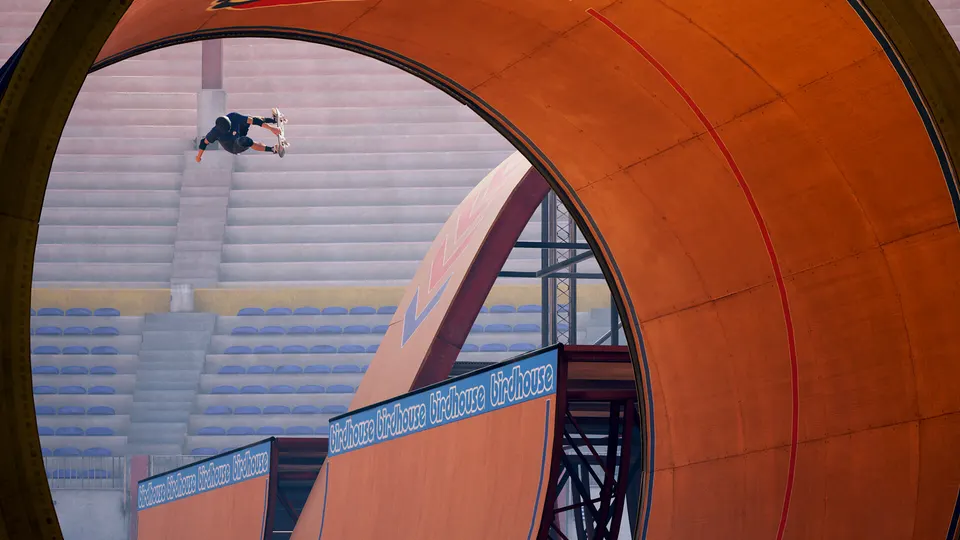
Tony Hawk’s Pro Skater 1 + 2 (September 2020) was made by Vicarious Visions, a studio with experience in remakes. They rebuilt every level of the first two games with modern graphics, kept the controls almost untouched and put the original pros alongside new skaters such as Leticia Bufoni, Nyjah Huston and Lizzie Armanto. They brought back nearly all the soundtrack and added 37 new songs. It was the series’ best launch: more than a million copies in about ten days and a critics’ average of 88 to 90 out of 100. Shortly afterwards, Activision moved the studio to Blizzard and Vicarious Visions lost its name in 2022.
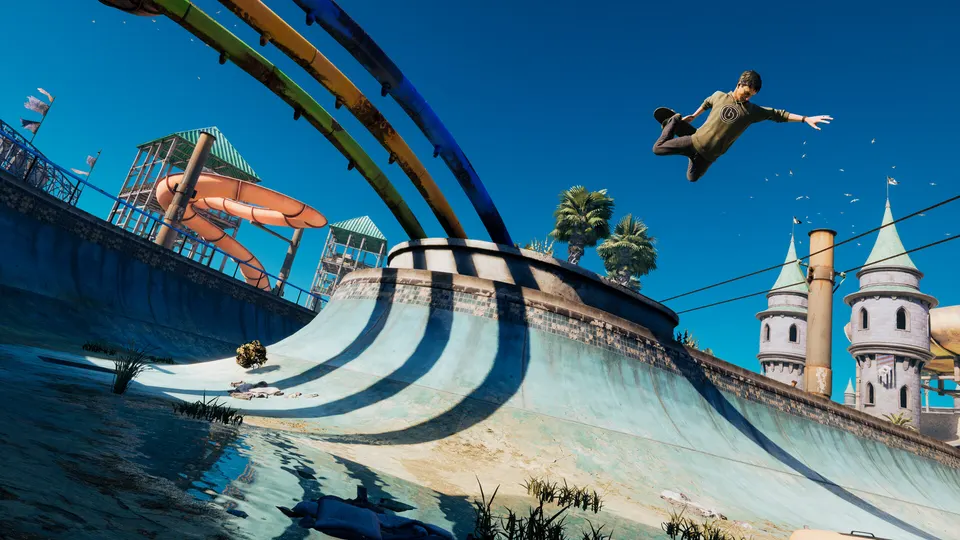
Tony Hawk’s Pro Skater 3 + 4 (July 2025), from Iron Galaxy, did the same with the two PS2 games. It has 31 pros, the biggest roster in the series, and online play for eight. People liked it (81 to 86 out of 100), though many players missed songs from the originals and criticised how the levels of the fourth game were squeezed into the two-minute format.
Simulators, indies and mobile
From 2010 the genre split into three paths: simulators chasing realism, small indies with ideas of their own, and mobile games.
Simulators
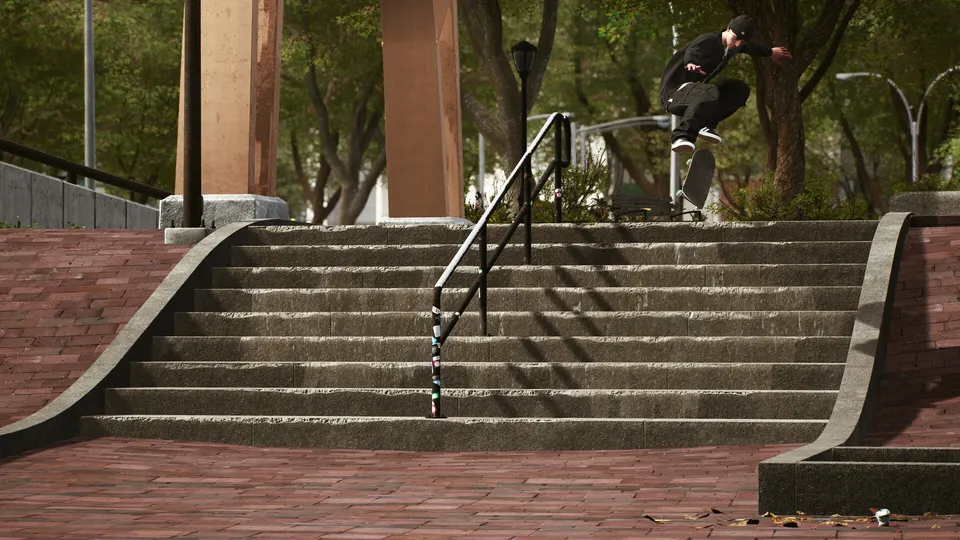
Skater XL (Easy Day Studios) went into early access in 2018 and was fully released in 2020. Each stick controls a foot, and the game leans heavily on its community: there are hundreds of maps and mods made by players, from real spots all over the world to impossible parks. It has pros such as Tom Asta, Tiago Lemos and Evan Smith.
Session: Skate Sim (crea-ture Studios, Canada) took a similar path: it began in 2015, went through Kickstarter, was in early access from 2019 and came out complete in 2022. It’s the most demanding of them all. Learning to kickflip in Session can take a whole afternoon, and that is exactly what its players are after. The PC version is the best rated; the Switch one is a good deal worse.
Indies
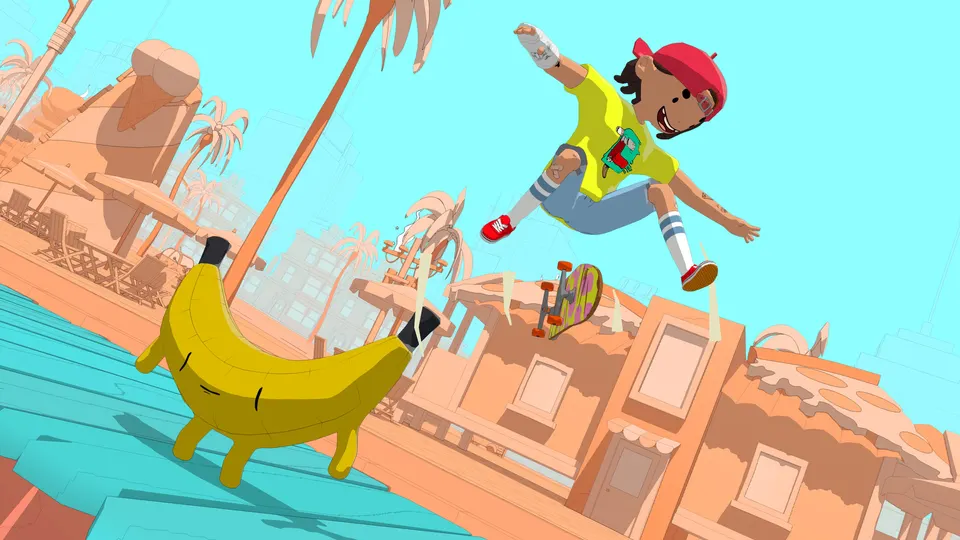
OlliOlli (2014) was made by Roll7, a small studio in London. It’s a 2D game where you move from left to right chaining tricks and grinds, and the trick is landing at exactly the right moment. It came out first on PS Vita and had a sequel in 2015. OlliOlli World (2022) swapped pixels for a world of colourful cartoons and won the DICE award for Sports Game of the Year. In 2024 Take-Two closed Roll7, and OlliOlli World was pulled from some digital stores in 2025.
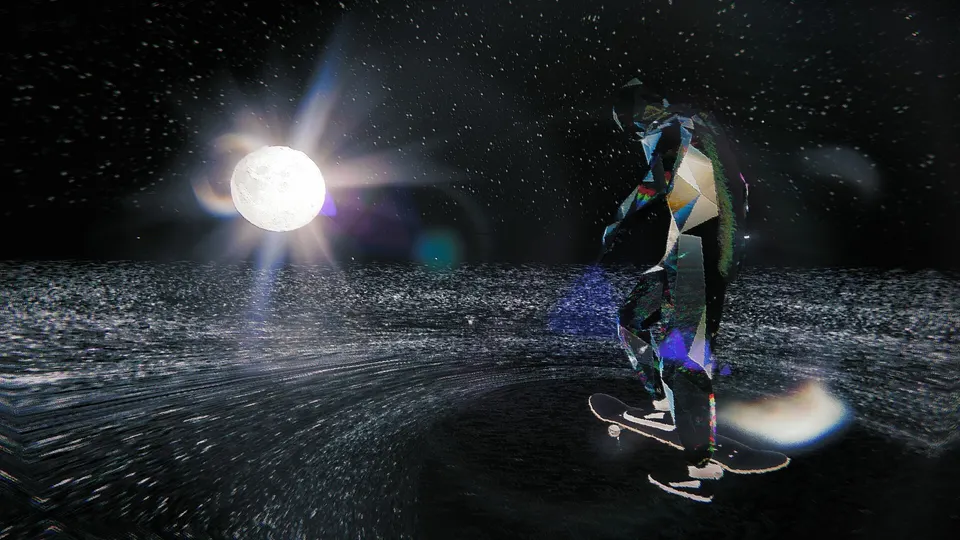
Indies have dared to try ideas a big studio would never approve. SkateBIRD (2021) is a skateboarding game starring birds that skate across rooms and desks. Bomb Rush Cyberfunk (Team Reptile, Netherlands, 2023) revives the style of Jet Set Radio, with graffiti, inline skates, BMX and skateboarding in a futuristic city. Skate Story (December 2025), by Sam Eng with Devolver Digital, tells of a glass demon who skates through the underworld to swallow the Moon; every fall cracks him a little more. It was one of the best rated games of 2025 (85 out of 100 on PC). And Skate City (2019) goes the opposite way: a calm game for skating without pressure, with a sequel set in New York in 2025.
Mobile
Touchgrind (Illusion Labs, Sweden, 2008) controls the board with two fingers on the screen, like a fingerboard. True Skate (2012) uses the same idea but with more realistic physics, and it’s one of the most played skateboarding games on mobile. It sells real skateparks from different cities as extras.
skate. (2025): the skate 4 that arrived for free
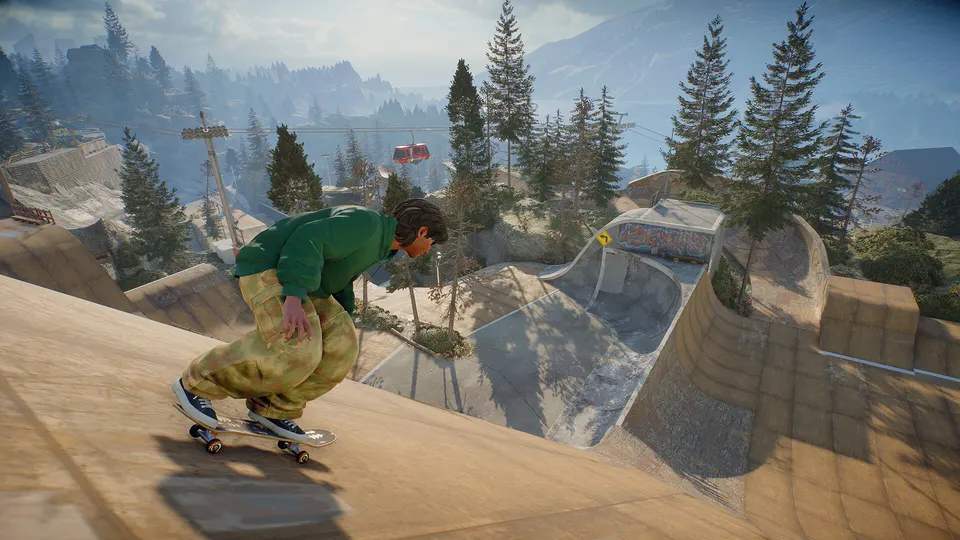
In 2020, ten years after skate 3, EA finally announced a new skate. It handed the job to Full Circle, a studio created in Vancouver for the purpose, which in 2022 renamed the project skate. and turned it into a free game with optional purchases. Early access opened on 16 September 2025 on PC, PlayStation, Xbox and mobile, and more than 15 million players passed through it in three weeks.
In November 2026 skate. is still in early access and on its Season 5, which arrived in September with a huge park, matches of up to 150 players and new tricks. Player opinion is split: the flick-it control still works, but people criticise the clothing and accessories shop, the prices of some bundles (more than 20 euros for a cosmetics pack) and the lack of an offline mode. Full Circle had layoffs in February 2026 and there is no date for the final version.
Do they teach you to skate?
What we know about this comes from the skaters themselves. Tony Hawk says many pros who are now in their 20s and 30s have told him they started skating because of the game. Rodney Mullen says the game did more to make tricks known than any video part, and that people started talking using their names. Hawk also remembers that when it came out, plenty of kids asked him where they could skate, because their towns had no skateparks.
What a video game teaches you and what it doesn’t depends a lot on the kind of game:
| Type | Examples | It teaches you | It doesn’t teach you |
|---|---|---|---|
| Arcade | Tony Hawk, OlliOlli, Skate Story | Trick names and the idea of chaining lines | Balance, fear, how the board responds |
| Sim-arcade | skate, skate 3, skate. | That each foot does something different in an ollie or a kickflip | Surfaces, effort, falls |
| Simulation | Session, Skater XL | In what order and at what moment the feet move | The confidence you earn on a real board |
A game doesn’t throw you to the ground when you get it wrong, and learning to fall is half of learning to skate. But watching a kickflip a thousand times on screen helps you understand what to do with your feet when you try it for real. If you want to go from controller to board, start with our guide on how to ollie.
Where to start
- For fun from the first minute: Tony Hawk’s Pro Skater 1 + 2 or 3 + 4.
- For something closer to skating: skate 3 (on Xbox One and Series), Session or Skater XL.
- Free: skate. or True Skate on your phone.
- Something different: OlliOlli World or Skate Story.
Real skaters in the games
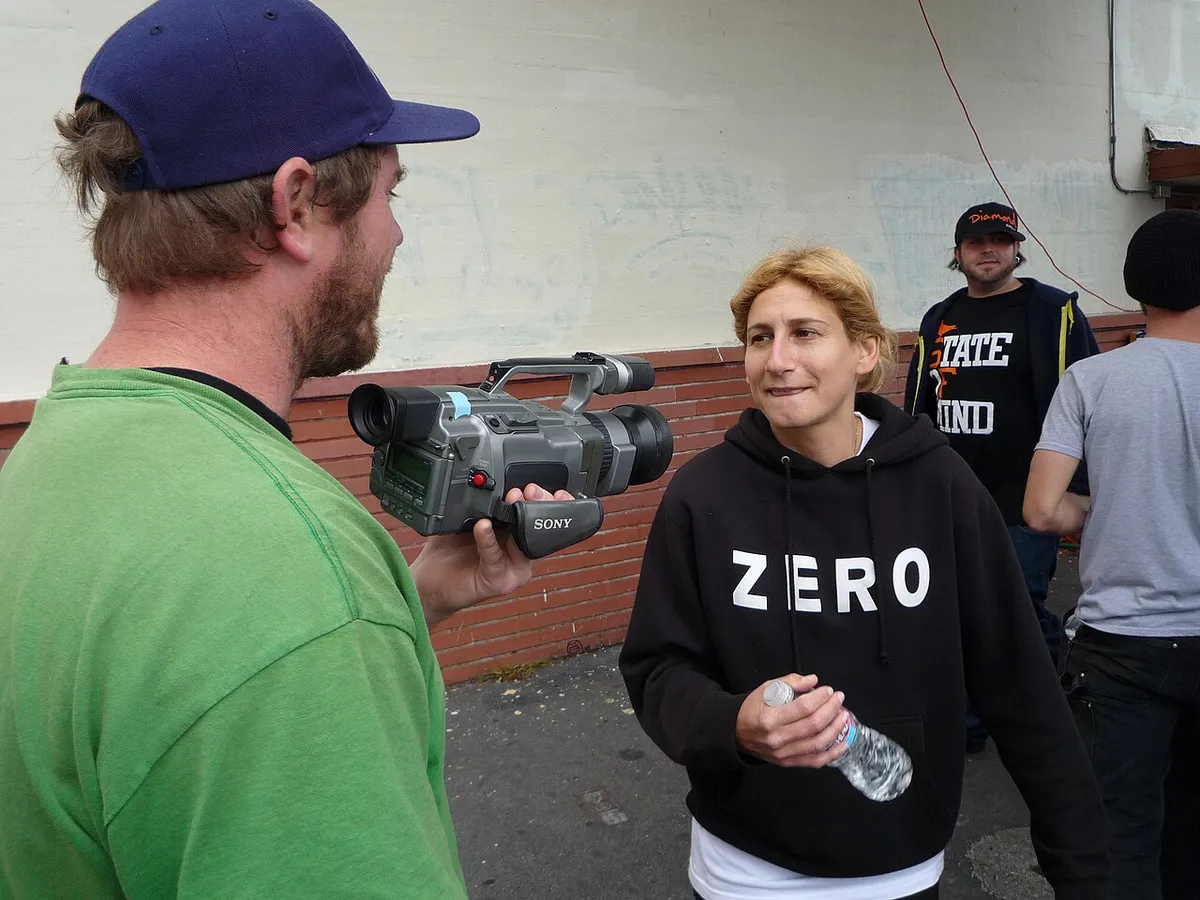
For many players, the Tony Hawk pros were the first professional skaters they ever met. Elissa Steamer appeared in the first five games and was the only woman on the roster for years; for many girls she was the first skater they saw on a screen (if her story interests you, it’s in our rundown of the best female skateboarders of all time). Hawk believes Kareem Campbell did a lot to show that skateboarding wasn’t only for white kids from California.
The rosters have kept growing: 19 pros in the first skate, 27 in skate 3 and 31 in THPS 3+4. In the simulators, current pros such as Tiago Lemos and Evan Smith appear. Many of the names in the games are in our list of the greatest skateboarders of all time.

Europe in skateboarding games
Europe has had more weight than it seems. Roll7, the studio behind OlliOlli, was from London; Touchgrind was made in Sweden and Bomb Rush Cyberfunk in the Netherlands, and the French company Nacon publishes Session. Geoff Rowley, from Liverpool, has been on the roster since the first Tony Hawk and is still in THPS 3+4. And within the games themselves, the city in the first skate mixes in spots from Barcelona, skate It travels to London and Paris, and one of the levels in Pro Skater HD is in Marseille.
No well-known skateboarding game has come out of Spain. There was a project from Valencia, Skapp, which combined a phone with a motion-sensor controller, but it was cancelled before release.
Common myths
- “Tony Hawk’s Pro Skater was the first skateboarding game.” 720° (1986), Skate or Die! (1987), Top Skater (1997) and Street Sk8er (1998) all came before.
- “Neversoft made Pro Skater 5.” Robomodo did. Neversoft had been out of the series for years.
- “skate. is skate 4.” It started out as skate 4, but it’s a free, always-online game with a very different model from skate 3.
- “The first Tony Hawk already had the manual.” The manual arrived in the second.
- “The game’s 900 is from 1990.” Hawk landed it at the 1999 X Games and it went into the game that same summer.
All 42 games, one by one
Here are all the games in the article, ordered by era. You can search them by name or filter by type: arcade, simulation, indie, mobile, remake, peripheral or free. Each card has the trailer or a gameplay video, and the most recent games also have a screenshot.
Pioneers 1986-1998
720°
This was the first skateboarding video game. It came out as an arcade machine in December 1986 with its own rotating controller and four parks with four events each: ramp, downhill, slalom and jump. If you took too long, a swarm of killer bees showed up and chased you until the run was over.
It came home in versions for 8-bit computers and the NES. In Europe it was distributed by U.S. Gold, and some editions included a cassette of the soundtrack. The NES version came off worst because of its controls. Today you can play the original inside LEGO Dimensions.
Skate Rock
Think of it as Paperboy on a skateboard. It came out for the Commodore 64 in 1986, the same year as 720°, which is why people sometimes argue over which was the first skateboarding game.
The Atari machine is the one that set the path for the genre, with its parks, its events and its own controller. Skate Rock was a much simpler game for a home computer, and almost nobody remembers it today outside retro forums.
California Games
It wasn't only a skateboarding game but a collection of beach sports: half-pipe, footbag, surfing, roller skating, BMX and frisbee. It came out for the Commodore 64 in June 1987 and sold more than 300,000 copies in nine months. It ended up bundled with the Atari Lynx handheld.
The half-pipe was programmed by Chuck Sommerville, who years later created Chip's Challenge. For many people it was their first look at skateboarding on a screen, even if it was one event out of six. In Europe it was distributed by U.S. Gold.
Skate Boardin'
A skateboarding game for the Atari 2600, with very simple graphics and a limited trick system. It has 30 hidden tricks you can find in a few minutes, including skitching, which means grabbing onto a car to get towed.
It came out in 1987. Its sequel, Super Skateboardin', arrived the following year on the Atari 7800. Today people look back on it fondly for what it tried to do with so few resources.
Skate or Die!
It was the first game Electronic Arts developed in-house. The idea came from producer Don Traeger and was inspired directly by 720°. What people remember most is Rob Hubbard's music for the Commodore 64's SID sound chip.
Konami made the NES conversion, which sold 1.2 million copies. There was a sequel in 1990, Skate or Die 2, and EA even commissioned Criterion to make a PS2 and Xbox remake that was cancelled in 2003.
Pro Skateboard Simulator
It is one of the few European skateboarding games of the eighties. Codemasters published it in the UK in 1988, for the most common 8-bit computers there: Amstrad CPC and ZX Spectrum.
Codemasters specialised in budget games for those machines, and this was one more in its catalogue. It had no weight on the later history of the genre, but it shows that skateboarding also reached European home computers.
Top Skater
A Sega arcade machine where you stood on a board-shaped platform to control the character. It came out in 1997, a year before Street Sk8er and two before Tony Hawk's Pro Skater.
The soundtrack was entirely by Pennywise, and its director, Kenji Kanno, went on to make Crazy Taxi. It was one of the signs that the industry was interested in skateboarding again after almost ten years without games focused on skating.
Street Sk8er
It came out in Japan on 22 October 1998 under the name Street Boarders, in North America on 26 February 1999 with EA as publisher and in Europe in April 1999 as Street Skater. It arrived months before Tony Hawk's Pro Skater.
Reviews were lukewarm, but it showed there was an audience for a 3D skateboarding game on PlayStation. It's a good example of how the gap was already there when Neversoft started its own game. It got a sequel in 2000.
The Tony Hawk era 1999-2010
Tony Hawk's Pro Skater
Neversoft started the game by swapping the character of a Bruce Willis shooter for a skater, and in the studio they jokingly called it "John McClane's Pro Skater". It came out in North America on 29 September 1999 and in Europe on 18 October. Each run lasted two minutes: combos, S-K-A-T-E letters and hidden video tapes. Critics' average of 92 out of 100.
Activision hoped to sell 250,000 copies to recoup its investment. It sold around 800,000 that year and more than five million in total.
Thrasher Presents: Skate and Destroy
It came out in North America on 23 November 1999, two months after THPS, with the licence of Thrasher magazine and Rockstar as publisher. It had very early ragdoll physics for the time, a hip-hop soundtrack and twelve levels.
Z-Axis developed it, and its engine was later the base for Dave Mirra Freestyle BMX. It was the grittier, more street-flavoured alternative to Tony Hawk for anyone who wanted something else on their PlayStation.
Tony Hawk's Pro Skater 2
It is the best rated game in the series, with a critics' average of 98 out of 100. It introduced the manual, which the first game didn't have, along with the park editor and the option to create your own skater.
With the manual you could join ramp tricks to ground tricks and make almost endless combos, and the editor gave hours and hours of play. It sold 5.3 million copies up to 2007.
Grind Session
Sony published it for PlayStation and it came out in North America on 23 May 2000 and in Europe on 25 August. It featured six real pros: Cara-Beth Burnside, Daewon Song, Ed Templeton, John Cardiel, Pigpen and Willy Santos, plus some unlockables.
It competed with Tony Hawk's Pro Skater, which had been in shops for eight months. Its studio, Shaba Games, later ended up making THPS ports for other platforms.
Tony Hawk's Pro Skater 3
It brought the revert, which links a ramp trick to a manual, and it was the first game in the series with online play, on PS2. It was also the first to include in-game advertising, in the form of billboards. It's the entry where Rodney Mullen joined the roster. Critics' average of 97 out of 100.
The PS2 version sold 2.1 million copies in the US. Many remember it as the moment when the formula was at its sharpest.
Tony Hawk's Pro Skater 4
It dropped the two-minute limit. Goals were handed out by characters spread around the map, in a more open world than the first three games. It added the spine transfer, skitching and online play for up to eight players.
Its critics' average was 94 out of 100. With this entry the series began to open up to another way of playing, exploring a level with no clock, which Underground would push much further a year later.
Tony Hawk's Underground
The big novelty was being able to get off the board and walk, as well as climb into cars, in a story mode with your own character, Eric Sparrow. It also let you build parks. Critics' average of 90 out of 100.
Its soundtrack won an MTV award and the PS2 version sold 2.11 million copies in the US. With it, Tony Hawk stopped being just a two-minute combo game.
Tony Hawk's Underground 2
It came out on 4 October 2004 in North America with Bam Margera and Team Bam as the thread of the story. It added Focus mode, the Natas Spin and a Classic Mode with the setup of the first games.
The soundtrack included Johnny Cash. It was the entry where the formula started to look tired: critics' scores were already dropping compared with the earlier ones.
Tony Hawk's American Wasteland
It boasted a single continuous level in Los Angeles, with corridors that disguised the loading screens. It also brought BMX into the series and came out on Xbox 360 as well.
Critics' average of 77 out of 100. It was the point where scores began to drop clearly and where the series' sales began to fall.
Tony Hawk's Project 8
It came out in November 2006 and introduced Nail the Trick, which used the stick as if it were your foot and anticipated what skate would do a year later. Falls came with the hospital bill.
Critics' average of 81 out of 100 on Xbox 360. It won Sports Game of the Year at the Interactive Achievement Awards.
Tony Hawk's Proving Ground
It was Neversoft's last game in the series. It brought Nail the Manual and Nail the Grab, and was set in Baltimore, Philadelphia and Washington D.C. Critics' average of 79 out of 100 on its best version.
After this game, with sales falling, the studio left the series and moved on to Guitar Hero. In 2014 Neversoft was folded into Infinity Ward to work on Call of Duty.
Tony Hawk's Ride
You played standing on a wheel-less plastic board with sensors that detected which way you leaned. It cost around 120 dollars, critics panned it (44 to 47 out of 100) and in its first month it sold fewer than 114,000 units in the US.
It came out on 17 November 2009. Hawk pitched the idea, but Activision set a release date before the game was ready. These were the years of Guitar Hero and the Wii, and the board responded badly.
Tony Hawk: Shred
It was Robomodo's second attempt with the plastic board with sensors, a year after Ride. It came out on Xbox 360, PS3 and Wii to lukewarm reviews, and sold even less than its predecessor.
Players were already tired of filling the living room with plastic peripherals. After Shred, Activision shelved the series until 2012, when it released Pro Skater HD.
Tony Hawk after Neversoft: HD, THPS5 and the remakes
Tony Hawk's Pro Skater HD
It brought levels from THPS 1 and 2 to high-definition graphics, as a downloadable game for Xbox 360, PS3 and PC. Robomodo, the studio behind Ride and Shred, made it.
It included the Marseille level, from THPS2, a European nod. It was pulled from digital stores on 17 July 2017, so you can no longer buy it, and a good part of its content came back with the 2020 remake.
Tony Hawk's Pro Skater 5
Robomodo made it, not Neversoft, and it came out on 29 September 2015 with bugs of every kind, graphics from another generation and a patch of several gigabytes from day one. Its critics' average was 32 out of 100 on PS4, the lowest in the series.
Neversoft had been out of the series for years. For a while it looked like there would be no more Tony Hawk.
Tony Hawk's Pro Skater 1 + 2
Vicarious Visions, a studio with experience in remakes, made it, and it came out on 4 September 2020. They rebuilt every level of the first two games with modern graphics and kept the controls almost untouched. They put the original pros alongside new skaters such as Leticia Bufoni, Nyjah Huston and Lizzie Armanto.
They brought back nearly all the soundtrack and added 37 new songs. It was the series' best launch: more than a million copies in about ten days and a critics' average of 88 to 90 out of 100.
Tony Hawk's Pro Skater 3 + 4
Iron Galaxy made it, it came out on 11 July 2025 and it remakes the two PS2-era games. It has 31 pros, the biggest roster in the series, and online play for eight.
People liked it, with a critics' average of 81 to 86 out of 100, although many players missed songs from the originals and criticised how the levels of the fourth game were adapted to the two-minute format.
The skate era and simulators 2007-2026
skate (2007)
It changed the genre with the flick-it: tricks are done by moving one or both sticks as if they were your feet. Pulling the stick down and then up makes an ollie, and if you flick it diagonally on the way up you get a kickflip. Critics' average of 86 out of 100 on Xbox 360.
The first prototype was a program with no graphics that simply scored each gesture from 1 to 5. The city, San Vanelona, mixes spots from San Francisco, Vancouver and Barcelona. That year it sold nearly twice as much as the Tony Hawk game of the moment.
skate It
This is the skate version for Wii, DS and iOS, launched on 19 November 2008 in North America. It adapted the controls to other devices: touchscreen on DS and iOS and a motion controller on Wii.
It took the action to London and Paris. It's the entry in the series built for other platforms and other controls, and the one that gets mentioned least when people talk about the series.
skate 2
It came out on 21 January 2009. In the story, skating was illegal, and the company MongoCorp appeared. It let you get off the board and walk, move objects around the scene and edit replays.
Critics' average of 84 out of 100. It kept the first game's flick-it and added freedom to move around the city, which is what many players remember about this entry.
skate 3
It's set in Port Carverton and brings a park builder, online teams and 46 songs. Critics' average of 80 out of 100.
It became popular years later thanks to YouTube videos of its ragdoll falls and physics glitches, and those videos kept it selling for a long time. You can play it on Xbox One since 2016 through backwards compatibility. The request for a skate 4 became a comment-section classic.
Shaun White Skateboarding
This is Ubisoft's skateboarding game, carrying the name of Shaun White, the elite snowboarder and skater. It came out in 2010, the same year as skate 3, when Tony Hawk and skate already dominated the market.
Reviews were mixed, with a critics' average of 61 out of 100. It's an example of how hard it was to break into a market with two established series.
skate.
The skate 4 that EA announced in 2020 ended up as skate., a free game with optional purchases that opened in early access on 16 September 2025 on PC, consoles and mobile. In its first three weeks more than 15 million players passed through it. It keeps the flick-it control.
It's still in early access and is on Season 5. Opinion is divided over the clothing and accessories shop, the price of some bundles and the lack of an offline mode. Full Circle had layoffs in February 2026 and there is no date for the final version.
Skater XL
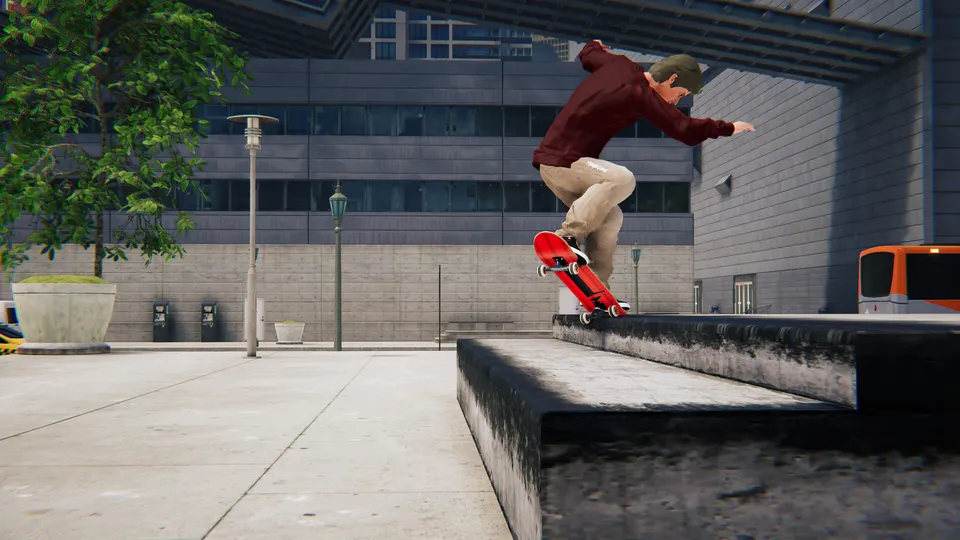
It went into early access in 2018 and came out in full in 2020. Each stick controls a foot, and it has licensed skaters such as Tom Asta, Tiago Lemos, Evan Smith and Brandon Westgate.
Its strong point is the community: there are hundreds of maps and mods made by players, from real spots all over the world to impossible parks. Easy Day Studios is based in Long Beach, California, and the game came to Switch in December 2023.
Session: Skate Sim
It began as a project in 2015, raised funds on Kickstarter in 2017 and came out in early access on 17 September 2019. Version 1.0 arrived on 22 September 2022. You control each foot with a stick, and it's the most demanding of the simulators.
Learning to kickflip can take a whole afternoon, and that is exactly what its players are after. The Canadian studio crea-ture develops it and the French company Nacon publishes it.
Indies and mobile
Touchgrind
It came out on 15 October 2008 and is controlled with two fingers on the screen, as if it were a fingerboard. Illusion Labs, a Swedish studio, made it.
Its sequel, Touchgrind Skate 2, arrived in 2013 with the same idea. It's a game built for short sessions on your phone, the kind you play waiting for the bus.
True Skate
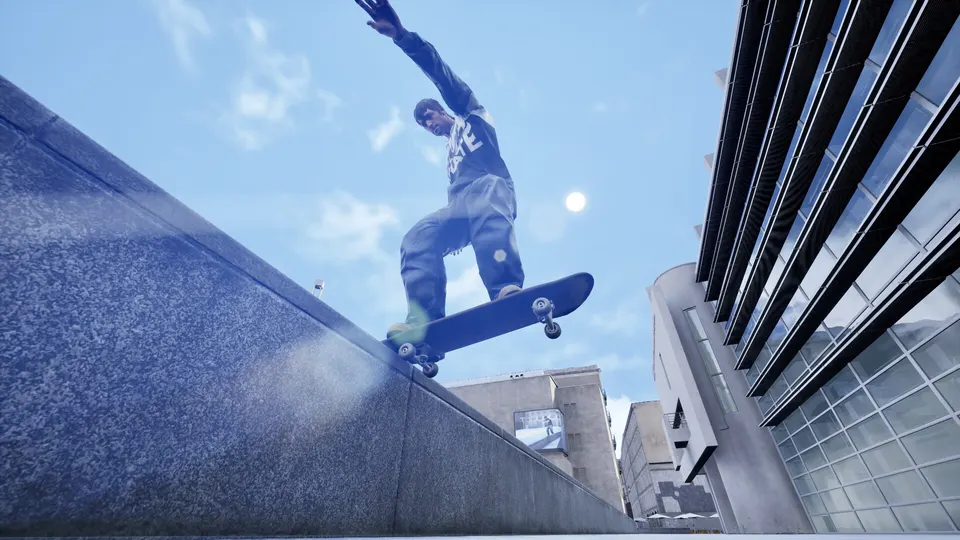
It's a mobile skateboarding simulator with two-finger touch controls and more realistic physics than its predecessors. It came out in 2012 and is one of the most played skateboarding games on iOS and Android.
It sells real skateparks from different cities as extras. It also exists on Apple Arcade as True Skate+ and on Steam, and it's one of the easiest free options to start with.
Touchgrind Skate 2
This is the sequel to the Swedish touchscreen fingerboard, and it came out in November 2013 for iOS and Android. It has a critics' average of 80 out of 100, higher than the original.
The studio, Illusion Labs, also released a BMX version in the same style. It keeps the two-finger control and the small-scale scenes, built for playing on a touchscreen.
OlliOlli
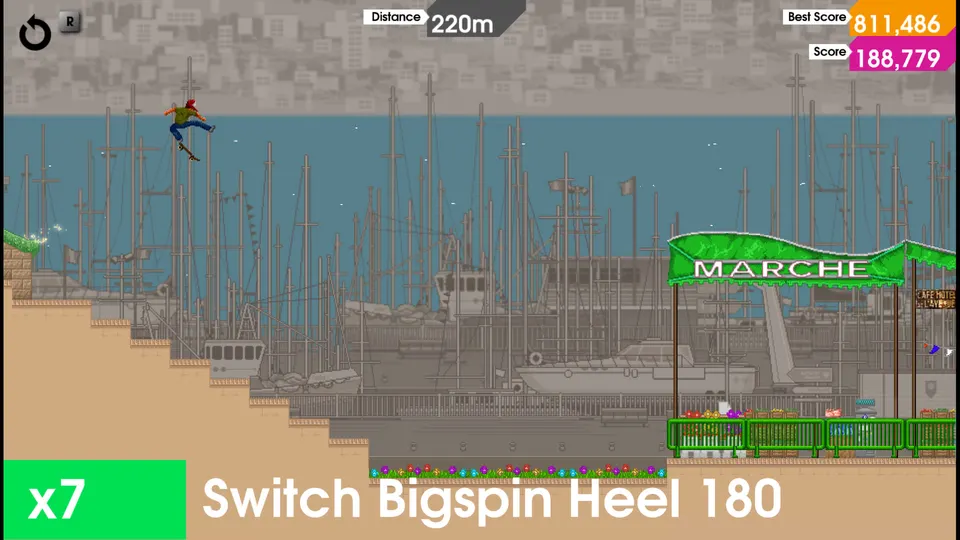
It's a 2D skateboarding game from the London studio Roll7. It came out on 21 January 2014, first on PS Vita. You move from left to right chaining tricks and grinds, and the trick is landing at exactly the right moment.
It's closer to arcade than to simulation. It got a sequel in 2015, OlliOlli2, and paved the way for OlliOlli World, eight years later.
Skate City
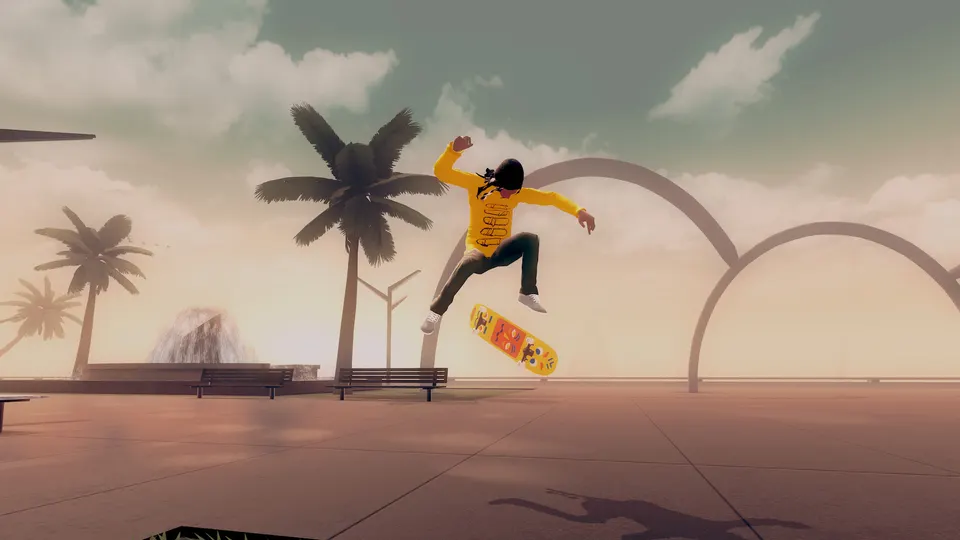
It's a laid-back game with a carefully crafted look, made for playing on your phone without pressure. It was published in 2019 and later came to Switch, PC and consoles.
In 2025 Skate City: New York came out, set in that city, for iOS, macOS and tvOS. Agens Games makes it with Snowman as publisher, and it's a much more relaxed proposition than the rest of the skateboarding games.
Skatebird
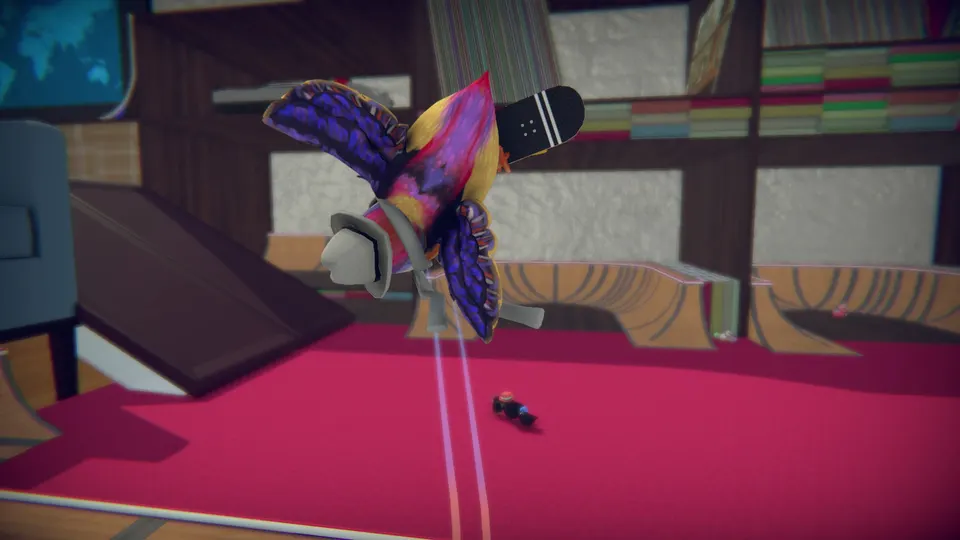
A bird that skates. Skatebird came out on 16 September 2021 and its heroes are birds that skate across rooms and desks, with tricks, grinds and missions.
Glass Bottom Games made it for PC, Switch, Xbox and PlayStation. It shows how far the genre goes in indie territory, with ideas a big studio would never approve.
OlliOlli World
It came out on 8 February 2022 and swapped pixels for a world of colourful cartoons. It won the DICE award for Sports Game of the Year.
Roll7 closed in 2024, when Take-Two got rid of the studio. The game was pulled from some digital stores in 2025, although it's still on PSN and Switch. It's the latest entry in a series that began with a small studio in London.
Bomb Rush Cyberfunk
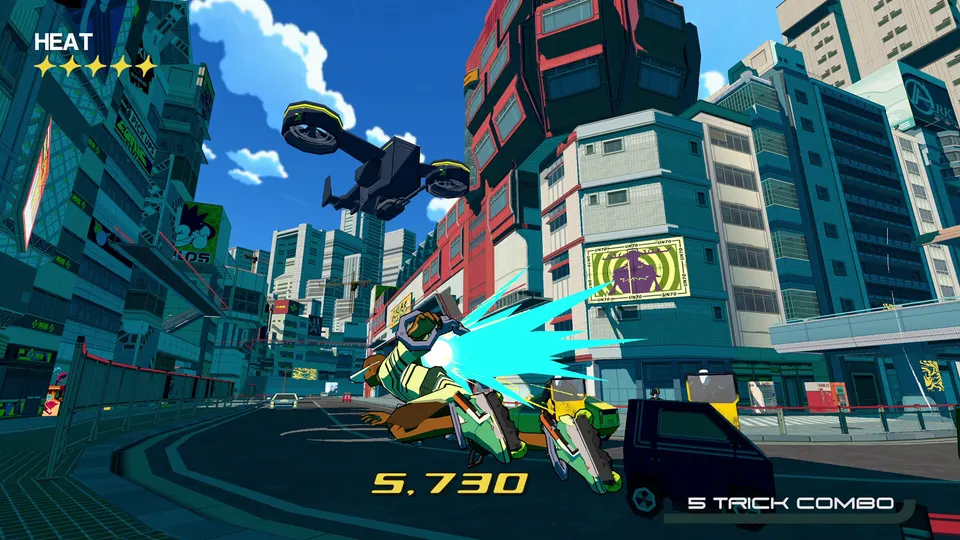
It's a tribute to Jet Set Radio in which you skate, go on inline skates or ride BMX through a futuristic city full of graffiti. It came out on 18 August 2023 and was made by Team Reptile, from the Netherlands.
It isn't a pure skateboarding game, but it plays by the genre's logic: grinds, tricks and combos chained all over the city.
Skate Story
A glass demon skates through the underworld to swallow the Moon, and every fall cracks him a little more. Sam Eng made it with Devolver Digital and it came out on 8 December 2025.
The soundtrack is by Blood Cultures and John Fio. Critics' average of 85 out of 100 on PC, one of the highest scores of 2025.
Nothing matches those filters.
Conversation
Your name will be public. Your email stays private. Comments are reviewed before publishing.